
One of the most common complaints we hear: a contractor visits, applies mould paint or a bleach wash, and marks the job "completed". Within weeks, sometimes
On this page
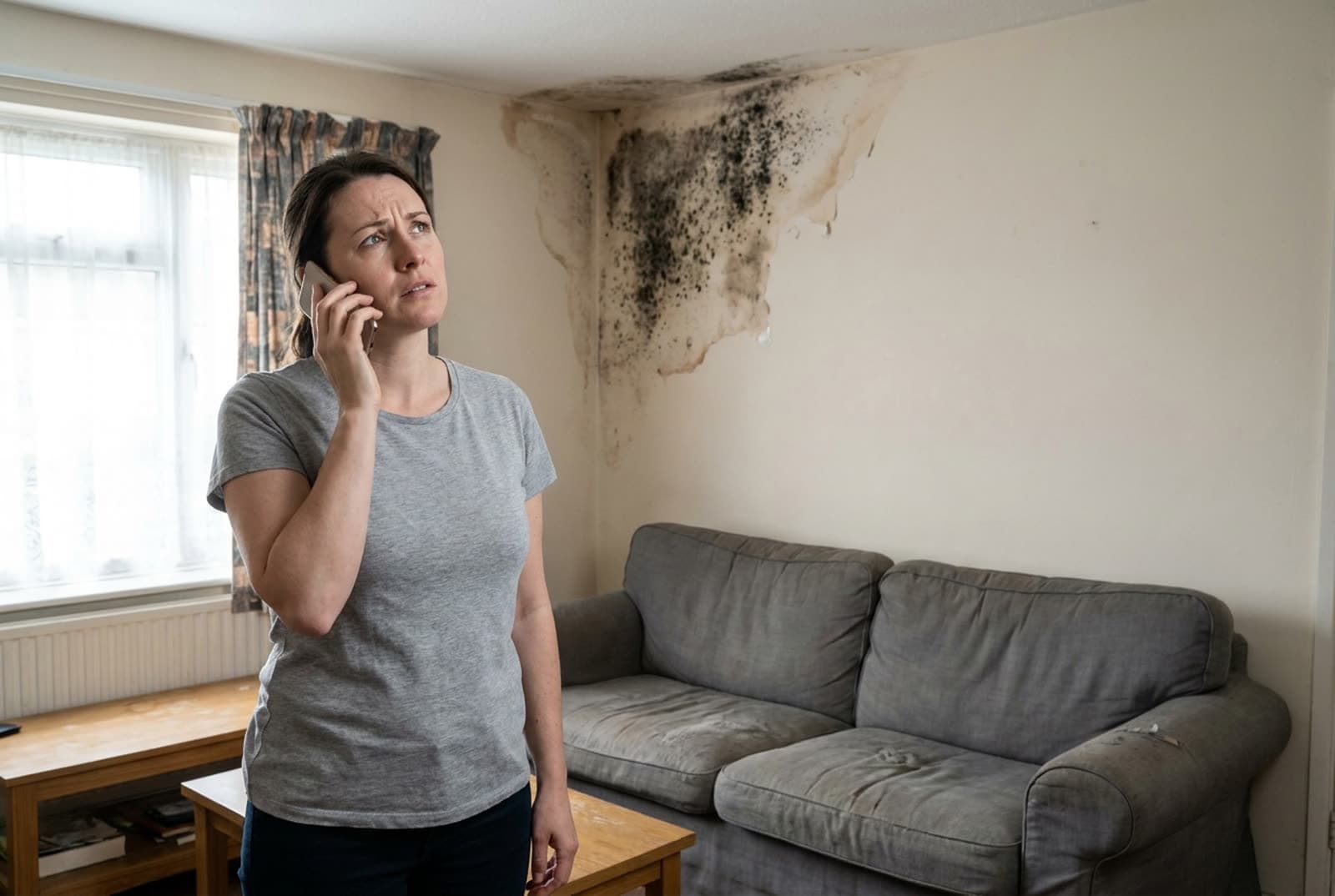
One of the most common complaints we hear: a contractor visits, applies mould paint or a bleach wash, and marks the job "completed". Within weeks, sometimes days, the mould is back. That is not a repair. It is a cosmetic treatment leaving the cause untouched, and it can actually strengthen a legal claim.
The short answer
Painting over mould without fixing the damp does not discharge the repair duty. No court treats a cosmetic job as a finished repair. Documenting the mould's return after such a job is strong evidence the root cause was never fixed.
Key facts
- The 2024 to 2025 English Housing Survey found about 5% of homes in England, around 1.4 million, had a problem with damp, most common in privately rented homes (10%). English Housing Survey 2024-25, GOV.UK
- The Housing Ombudsman's 2021 report "Spotlight on damp and mould: it's not lifestyle" called on landlords to stop automatically blaming tenants' lifestyle for damp and mould. Housing Ombudsman, Spotlight on damp and mould
Why painting over mould is not a repair
Section 11 of the Landlord and Tenant Act 1985 makes the landlord keep the structure in repair, and the heating and water installations working. Mould fed by damp coming through the structure, a leaking roof, failed pointing, poor flashing, rising damp, is a structural problem.
Anti-mould paint covers the symptom, not the moisture source. The mould returns because nothing that let it grow has changed. In the Act's meaning, no repair has happened.
The Homes (Fitness for Human Habitation) Act 2018 likewise requires a home free of serious damp throughout the tenancy. A painted-over problem back within weeks is still a serious damp problem.
Document the reappearance
Treated, and marked "completed"? Start photographing straight after the work. When the mould returns, often within weeks, your dated record shows:
- the mould was present before the treatment
- a cosmetic treatment was applied
- the mould reappeared within a short time
- the underlying cause was not fixed
That sequence is powerful evidence the root cause was never touched. Courts and Ombudsman investigators know the pattern well.
Write to your landlord
The moment the mould returns, email the landlord. Say it is back, the cosmetic job missed the cause, and you require an inspection to find and fix the root. Attach dated photos.
Include the date of the original treatment, so the timeline stands clear.
Request an independent survey
A surveyor's damp survey names the cause: penetrating damp, rising damp, condensation born of structural failings, or a mix. Commissioning and paying for it falls to the landlord under Section 11.
A landlord refusing the survey? Get the refusal in writing, then request one through the council's environmental health team instead.
Why it makes your claim stronger
In a claim, proof of a cosmetic job instead of a real repair, with the landlord on notice of the return, weighs heavily. It shows:
- the landlord was aware of the problem (they attended to treat it)
- the repair was inadequate (the problem returned)
- the landlord failed to take further action after the inadequate repair
That can stretch the claim period and lift the award, because the breach carried on even after the landlord's attempt.
What to do now
Photograph today. Write today. Log the dates. If no proper survey and real repair follows, contact environmental health, then call us.
When should I contact Support for Tenants?
A landlord who keeps painting over mould instead of fixing the cause? Call us on 0800 030 4669.
No upfront cost. You only pay if you win, and the fee comes out of the compensation, not your pocket. If you don't win, you pay nothing.
Sources
- Landlord and Tenant Act 1985, Section 11 (legislation.gov.uk)
- Homes (Fitness for Human Habitation) Act 2018 (legislation.gov.uk)
- Understanding and addressing the health risks of damp and mould in the home (GOV.UK)
Related articles
We review every guide at least twice a year and update it when the law changes. If you spot something out of date or wrong, email help@supportfortenants.co.uk.
Reviewed against current housing law for England and Wales as at 15 June 2026. Checked by our SRA-regulated panel solicitors. This is general information, not legal advice for your specific case. Any compensation figures or ranges shown are illustrative only, not a promise; every case is different.
Related guides
Can I sue my landlord for mould?
Yes. If your landlord ignores damp and mould, you can claim. Here is the law and how it works.
Read
How to report damp to your landlord (and make it stick)
The exact steps to report damp in writing, what evidence to keep, and what your landlord must do under Awaab's Law. 5-minute read.
Read
Is condensation the landlord's fault or mine?
Often the landlord's. If condensation comes from poor ventilation, cold walls, or a building fault, it is their job to fix. Here is how to tell.
Read
Still stuck?
Call us free or start a claim online. We'll tell you honestly whether you have a case worth pursuing.