Yes. If your landlord ignores damp and mould, you can claim. Here is the law and how it works.
On this page
In short
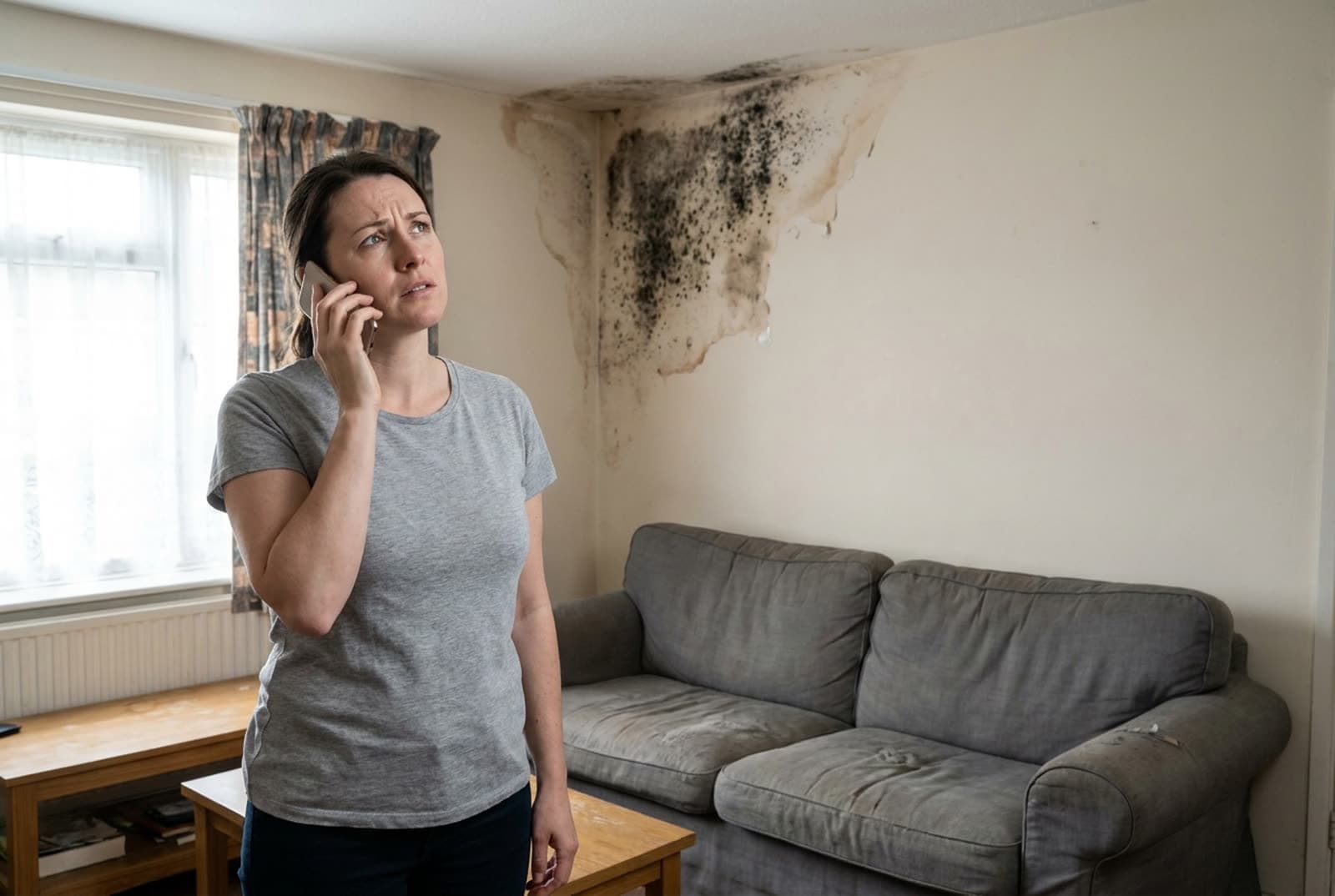
Yes. If you told your landlord about damp and mould and they did not fix it, you may have a claim. Mould is a serious hazard. A no-win-no-fee claim is one option open to you.
Key facts
- Official guidance from the UK Health Security Agency and the Department of Health and Social Care links damp and mould in homes in England to around 5,000 cases of asthma and 8,500 lower respiratory infections among children and adults. Health risks of damp and mould, GOV.UK
- The 2024 to 2025 English Housing Survey found about 5% of homes in England, around 1.4 million, had a problem with damp, most common in privately rented homes (10%). English Housing Survey 2024-25, GOV.UK
What the law says
Section 11 of the Landlord and Tenant Act 1985 makes your landlord responsible for keeping the home in repair. The Homes (Fitness for Human Habitation) Act 2018 says your home must be safe to live in, and bad mould makes it unsafe.
Mould is a recognised health hazard. Government guidance warns that the respiratory effects of damp and mould "can cause serious illness and, in the most severe cases, death."
If you rent from a council or housing association, Awaab's Law applies. Since 27 October 2025, they must look at a serious hazard like mould within 10 working days, send a written summary within 3 working days after that, and complete the safety work within 5 working days of the investigation ending (larger follow-on jobs must start within 12 weeks). An emergency must be made safe within 24 hours.
What to do
- Report the mould to your landlord in writing. Keep a copy with the date.
- Take dated photos of every patch.
- See your doctor if anyone is unwell, and ask for a short note.
- Do not just paint over it. It comes back if the cause is not fixed.
If your landlord does nothing
A no-win-no-fee claim is one route open to you.
- A Conditional Fee Agreement may fund the solicitor's work. No upfront cost. You only pay if you win, and the fee comes out of the compensation, not your pocket. If you don't win, you pay nothing.
Support for Tenants is a regulated company, not a solicitor. Panel solicitors run the cases.
Read more about damp and mould, how mould affects your health, or your rights.
Talk to someone
If your landlord is ignoring mould in your home, call us free on 0800 030 4669.
Sources
- Landlord and Tenant Act 1985, Section 11 (legislation.gov.uk)
- Homes (Fitness for Human Habitation) Act 2018 (legislation.gov.uk)
- Environmental Protection Act 1990, Section 82 (legislation.gov.uk)
- Awaab's Law: guidance for social landlords (GOV.UK)
- Understanding and addressing the health risks of damp and mould (GOV.UK)
We review every guide at least twice a year and update it when the law changes. If you spot something out of date or wrong, email help@supportfortenants.co.uk.
Reviewed against current housing law for England and Wales as at 20 May 2026. Checked by our SRA-regulated panel solicitors. This is general information, not legal advice for your specific case. Any compensation figures or ranges shown are illustrative only, not a promise; every case is different.
Related guides
How to report damp to your landlord (and make it stick)
The exact steps to report damp in writing, what evidence to keep, and what your landlord must do under Awaab's Law. 5-minute read.
Read
Is condensation the landlord's fault or mine?
Often the landlord's. If condensation comes from poor ventilation, cold walls, or a building fault, it is their job to fix. Here is how to tell.
Read
How do damp and mould affect your health?
Damp and mould can cause breathing problems, chest infections, and worse asthma. They are a serious hazard and your landlord must act. Here is what to do.
Read
Still stuck?
Call us free or start a claim online. We'll tell you honestly whether you have a case worth pursuing.