
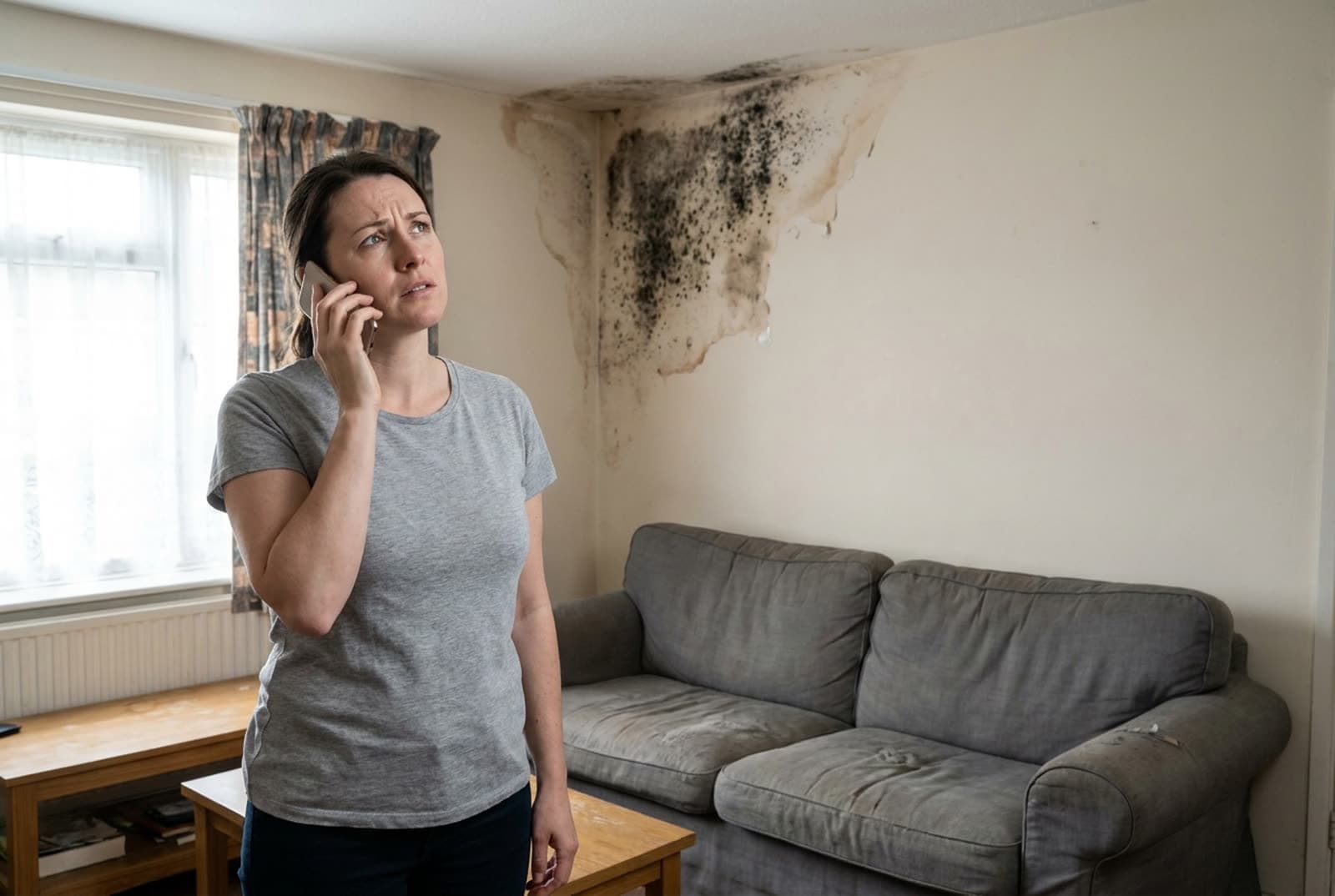
Landlords sometimes ask tenants to foot the bill for a damp or mould survey. That can feel fair, above all when the landlord says they just want to "find out
On this page
Landlords sometimes ask tenants to foot the bill for a damp or mould survey. That can feel fair, above all when the landlord says they just want to "find out what is going on." It is not fair, and you do not have to pay.
The short answer
No. Reported damp or mould, and a landlord who wants you paying for the survey? You do not have to. The cost of investigating a repair the law makes the landlord do falls on the landlord, never you.
Key facts
- The 2024 to 2025 English Housing Survey found about 5% of homes in England, around 1.4 million, had a problem with damp, most common in privately rented homes (10%). English Housing Survey 2024-25, GOV.UK
- The same survey found serious condensation (3% of homes) was more common than penetrating damp (2%) or rising damp (1%). English Housing Survey 2024-25, GOV.UK
Why the landlord is responsible for the survey cost
Under Section 11 of the Landlord and Tenant Act 1985, your landlord must keep the structure and outside of your home in good repair. That covers the roof, walls, windows, and anything else that lets damp in.
Finding out whether a problem exists is part of that legal duty. The investigation cannot be split off from the repair, with the bill for one handed to the tenant.
The Tenant Fees Act 2019 protects you
The Tenant Fees Act 2019 bans landlords from charging tenants for anything not listed in that Act. A damp survey is not on the list. A landlord who tries to charge you is breaking the law.
That holds whether they ask you to pay a surveyor directly, add the cost to your rent, or take it from your deposit later.
What if you have already paid for a survey yourself?
Did the landlord refuse to act, leaving you to arrange and pay for a survey yourself? That cost may come back to you. It can join a housing disrepair claim as a special damage, beside any compensation for the damp or mould itself.
Keep the invoice, the surveyor's report, and every message showing the landlord refused to arrange a survey despite your reports. That paper trail matters.
What you should do now
Write to your landlord by email, so a record exists. Say clearly when you reported the damp or mould. Say that investigating and repairing it is their legal duty under Section 11 of the Landlord and Tenant Act 1985. Say you will not be paying for any survey. Then ask them to arrange and pay for one within a fair timeframe, typically 14 to 28 days depending on how bad the problem runs.
A landlord who keeps refusing, or keeps insisting you pay, strengthens any claim you later make.
When should I contact Support for Tenants?
A landlord refusing to act on damp or mould, or pushing you to pay for a survey that is theirs to fund? Call us on 0800 030 4669.
No upfront cost. You only pay if you win, and the fee comes out of the compensation, not your pocket. If you don't win, you pay nothing.
Sources
- Tenant Fees Act 2019 (legislation.gov.uk)
- Landlord and Tenant Act 1985, Section 11 (legislation.gov.uk)
- Homes (Fitness for Human Habitation) Act 2018 (legislation.gov.uk)
Related articles
We review every guide at least twice a year and update it when the law changes. If you spot something out of date or wrong, email help@supportfortenants.co.uk.
Reviewed against current housing law for England and Wales as at 15 June 2026. Checked by our SRA-regulated panel solicitors. This is general information, not legal advice for your specific case. Any compensation figures or ranges shown are illustrative only, not a promise; every case is different.
Related guides
Can I sue my landlord for mould?
Yes. If your landlord ignores damp and mould, you can claim. Here is the law and how it works.
Read
How to report damp to your landlord (and make it stick)
The exact steps to report damp in writing, what evidence to keep, and what your landlord must do under Awaab's Law. 5-minute read.
Read
Is condensation the landlord's fault or mine?
Often the landlord's. If condensation comes from poor ventilation, cold walls, or a building fault, it is their job to fix. Here is how to tell.
Read
Still stuck?
Call us free or start a claim online. We'll tell you honestly whether you have a case worth pursuing.