Finding mould in your home is distressing. When your child is unwell and you suspect the mould, it becomes urgent. Damp and mould can trigger and worsen
On this page
- The short answer
- Key facts
- See your doctor and ask for a written note
- If you rent from a council or housing association: Awaab's Law
- If you rent privately: the Homes (Fitness for Human Habitation) Act 2018
- Your council's environmental health team
- Document everything
- Compensation for health impact
- When should I contact Support for Tenants?
- Sources
- Related articles
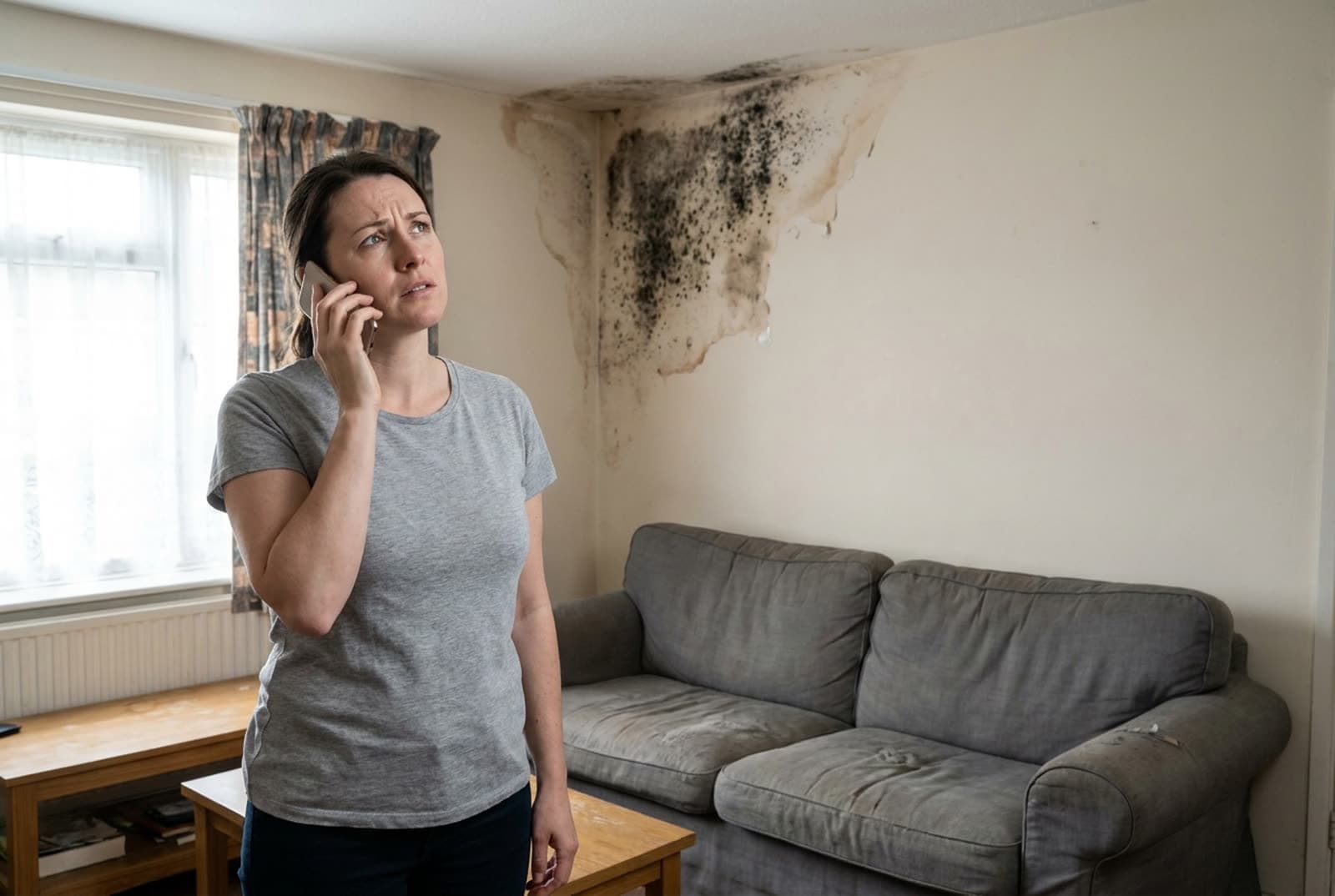
Finding mould in your home is distressing. When your child is unwell and you suspect the mould, it becomes urgent. Damp and mould can trigger and worsen breathing conditions, including asthma, and children are hit harder than adults. You have legal options, and there are steps you can take right now.
The short answer
This is among the most serious situations a tenant can face. Get your child seen by your doctor as soon as possible, start recording everything, and write to your landlord at once. If the landlord does not act, the law gives you, and your council, the power to force them to.
Key facts
- Official guidance from the UK Health Security Agency and the Department of Health and Social Care links damp and mould in homes in England to around 5,000 cases of asthma and 8,500 lower respiratory infections among children and adults. Health risks of damp and mould, GOV.UK
- The 2024 to 2025 English Housing Survey found about 5% of homes in England, around 1.4 million, had a problem with damp, most common in privately rented homes (10%). English Housing Survey 2024-25, GOV.UK
See your doctor and ask for a written note
Take your child to your doctor and describe the conditions at home. Ask for a written note saying the damp or mould may be contributing to your child's symptoms. That note is important evidence for any claim or council inspection. Keep prescription records, referral letters and appointment dates.
If you rent from a council or housing association: Awaab's Law
Since 27 October 2025, Awaab's Law requires social landlords to investigate a damp and mould hazard within 10 working days of your report, complete the safety work within 5 working days of the investigation ending, and send you a written summary within 3 working days of the investigation. Any further works must begin within 12 weeks at the latest. An emergency hazard must be investigated and made safe within 24 hours.
A doctor's letter confirming your child's health is suffering raises the urgency of your report and creates a clear record.
If you rent privately: the Homes (Fitness for Human Habitation) Act 2018
This law requires every rented home to be fit to live in, at the start of the tenancy and all the way through. A home with mould bad enough to cause breathing symptoms in a child may fail that test. You can take your landlord to court under this Act without going through the council first.
Your council's environmental health team
Damp and mould counts as a Category 1 hazard under the Housing Health and Safety Rating System (HHSRS) where it is likely to harm health. Category 1 is the most serious level. The council's environmental health team can inspect your home free of charge and, on finding a Category 1 hazard, can serve your landlord an Improvement Notice requiring repairs by a set date.
Ask the council's environmental health team for an inspection, with your doctor's letter to hand. It helps.
Document everything
Keep a record: dated photos of the mould, photos of damage to your child's belongings or bedding, every message you sent the landlord, and every response, or silence. Note dates and times of conversations. This evidence is the foundation of any claim.
Compensation for health impact
In a disrepair claim, your child's health being harmed weighs on the compensation a court may award. That can include general damages for distress and suffering, plus costs you paid out because of the condition.
When should I contact Support for Tenants?
If mould is harming your child's health and your landlord is not acting, please call us now on 0800 030 4669.
No upfront cost. You only pay if you win, and the fee comes out of the compensation, not your pocket. If you don't win, you pay nothing.
Sources
- Homes (Fitness for Human Habitation) Act 2018 (legislation.gov.uk)
- Social Housing (Regulation) Act 2023, section 42, Awaab's Law (legislation.gov.uk)
- Awaab's Law: guidance for tenants in social housing (GOV.UK)
- Housing Health and Safety Rating System (HHSRS) guidance (GOV.UK)
Related articles
We review every guide at least twice a year and update it when the law changes. If you spot something out of date or wrong, email help@supportfortenants.co.uk.
Reviewed against current housing law for England and Wales as at 15 June 2026. Checked by our SRA-regulated panel solicitors. This is general information, not legal advice for your specific case. Any compensation figures or ranges shown are illustrative only, not a promise; every case is different.
Related guides
Can I sue my landlord for mould?
Yes. If your landlord ignores damp and mould, you can claim. Here is the law and how it works.
Read
How to report damp to your landlord (and make it stick)
The exact steps to report damp in writing, what evidence to keep, and what your landlord must do under Awaab's Law. 5-minute read.
Read
Is condensation the landlord's fault or mine?
Often the landlord's. If condensation comes from poor ventilation, cold walls, or a building fault, it is their job to fix. Here is how to tell.
Read
Still stuck?
Call us free or start a claim online. We'll tell you honestly whether you have a case worth pursuing.