
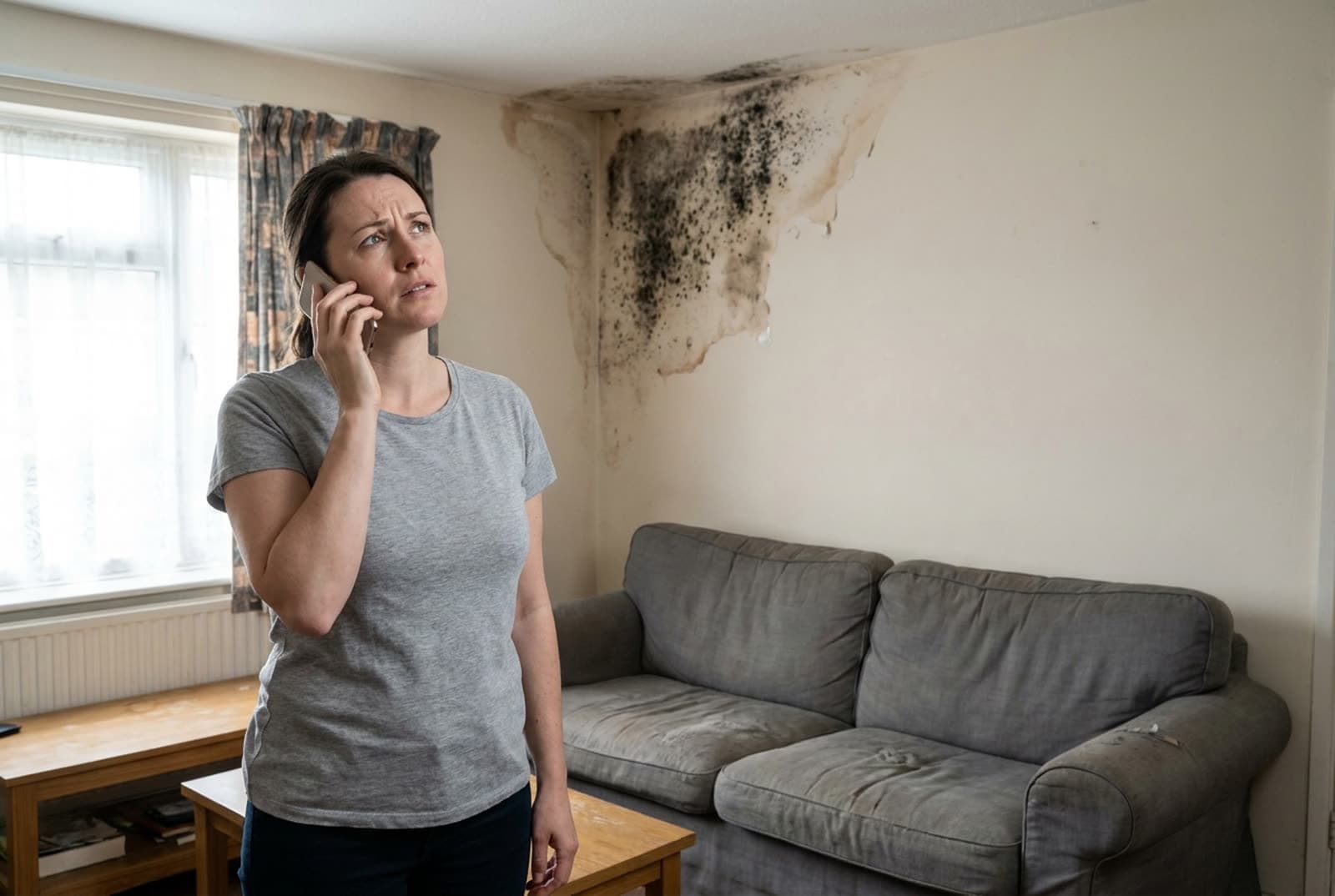
It is scary when your child is told they have asthma. Maybe you have had damp or mould in your rented home. You may think the two are linked. You could well
On this page
It is scary when your child is told they have asthma. Maybe you have had damp or mould in your rented home. You may think the two are linked. You could well be right. Damp and mould are known to raise the risk of breathing problems, including asthma, in children.
This gives you a strong reason to make a housing disrepair claim. Government guidance warns that the breathing effects of damp and mould "can cause serious illness and, in the most severe cases, death". It names children as some of the people most at risk.
The short answer
Yes. Your child may have been told they have asthma or another breathing problem. Your home may have had damp or mould that your landlord did not deal with. If so, you may be able to claim compensation. The main thing is to show that your landlord knew about the problem and did nothing. Medical proof that links the asthma to the home makes the claim much stronger.
Key facts
- Official guidance from the UK Health Security Agency and the Department of Health and Social Care links damp and mould in homes in England to around 5,000 cases of asthma and 8,500 lower respiratory infections among children and adults. Health risks of damp and mould, GOV.UK
- The 2024 to 2025 English Housing Survey found about 5% of homes in England, around 1.4 million, had a problem with damp, most common in privately rented homes (10%). English Housing Survey 2024-25, GOV.UK
The science: why mould matters for children's lungs
Mould makes tiny spores and mycotoxins. When you breathe these in over time, they can harm your lungs and airways. A child's lungs are still growing. This makes children more at risk than adults. Medical research and public health bodies all agree that damp and mould in the home are linked to asthma in children.
Because everyone agrees on this link, courts and legal cases know it well. You do not need to prove how mould causes harm from scratch.
What your doctor needs to say
A letter from your child's doctor, paediatrician, or lung doctor will make a claim much stronger. The letter should say:
- that your child has asthma, and the date it was found
- that the doctor was told about the mould or damp in your home
- that the doctor thinks the home may have caused or worsened the asthma
The letter does not need to say the mould definitely caused the asthma. Doctors are right to be careful about being certain. It is enough if the letter says the home is "a likely contributing factor" or "may have worsened respiratory symptoms". That is still strong proof.
What else you need to document
Photographs of the mould, with dates. Show how bad it is and where it is. Mould in a bedroom where a child sleeps matters a lot.
Written records of every time you told your landlord about the problem. Keep what they said back, or note when they did not reply.
Medical records, the dates of every asthma appointment, prescription, emergency visit or hospital stay while the home was in poor repair. It matters if your child got worse while the mould was still there.
School records, if your child missed school because of their asthma. Their attendance records can help the claim.
What you can claim for
A housing disrepair claim like this can include:
- General damages, money for the time you and your family lived with the poor conditions
- Personal injury for your child, for the pain, suffering and loss of enjoyment of life caused by the breathing problem
- Special damages, money you had to spend, such as on medicine, medical visits, and anything the mould ruined
The personal injury part can be large when a child's health has been harmed. Courts take harm to a child seriously.
Awaab's Law and social tenants
You may rent from a council or housing association. If so, Awaab's Law now says your landlord must look into reports of damp and mould within 10 working days. They must complete work to make the home safe within 5 working days of that check ending. Bigger follow-on jobs must start within 12 weeks. Awaab Ishak was a two-year-old who died from a breathing problem caused by mould in his social housing flat. His death led to this law. The law is aimed straight at stopping the kind of thing you may be going through.
What to do now
If you have not yet, tell your landlord about the damp or mould in writing today. Ask them for a written repair timetable. Take your child to your doctor and ask for a letter. Start your evidence file: photographs, all letters and messages, and all medical records.
Then call us.
When should I contact Support for Tenants?
Your child may have been told they have asthma or another breathing problem, and you think mould in your rented home played a part. If so, call us on 0800 030 4669.
No upfront cost. You only pay if you win, and the fee comes out of the compensation, not your pocket. If you don't win, you pay nothing.
Sources
- Understanding and addressing the health risks of damp and mould in the home (GOV.UK)
- Landlord and Tenant Act 1985, Section 11 (legislation.gov.uk)
- Awaab's Law: guidance for social landlords (GOV.UK)
- English Housing Survey (GOV.UK)
Related articles
We review every guide at least twice a year and update it when the law changes. If you spot something out of date or wrong, email help@supportfortenants.co.uk.
Reviewed against current housing law for England and Wales as at 15 June 2026. Checked by our SRA-regulated panel solicitors. This is general information, not legal advice for your specific case. Any compensation figures or ranges shown are illustrative only, not a promise; every case is different.
Related guides
Can I sue my landlord for mould?
Yes. If your landlord ignores damp and mould, you can claim. Here is the law and how it works.
Read
How to report damp to your landlord (and make it stick)
The exact steps to report damp in writing, what evidence to keep, and what your landlord must do under Awaab's Law. 5-minute read.
Read
Is condensation the landlord's fault or mine?
Often the landlord's. If condensation comes from poor ventilation, cold walls, or a building fault, it is their job to fix. Here is how to tell.
Read
Still stuck?
Call us free or start a claim online. We'll tell you honestly whether you have a case worth pursuing.