
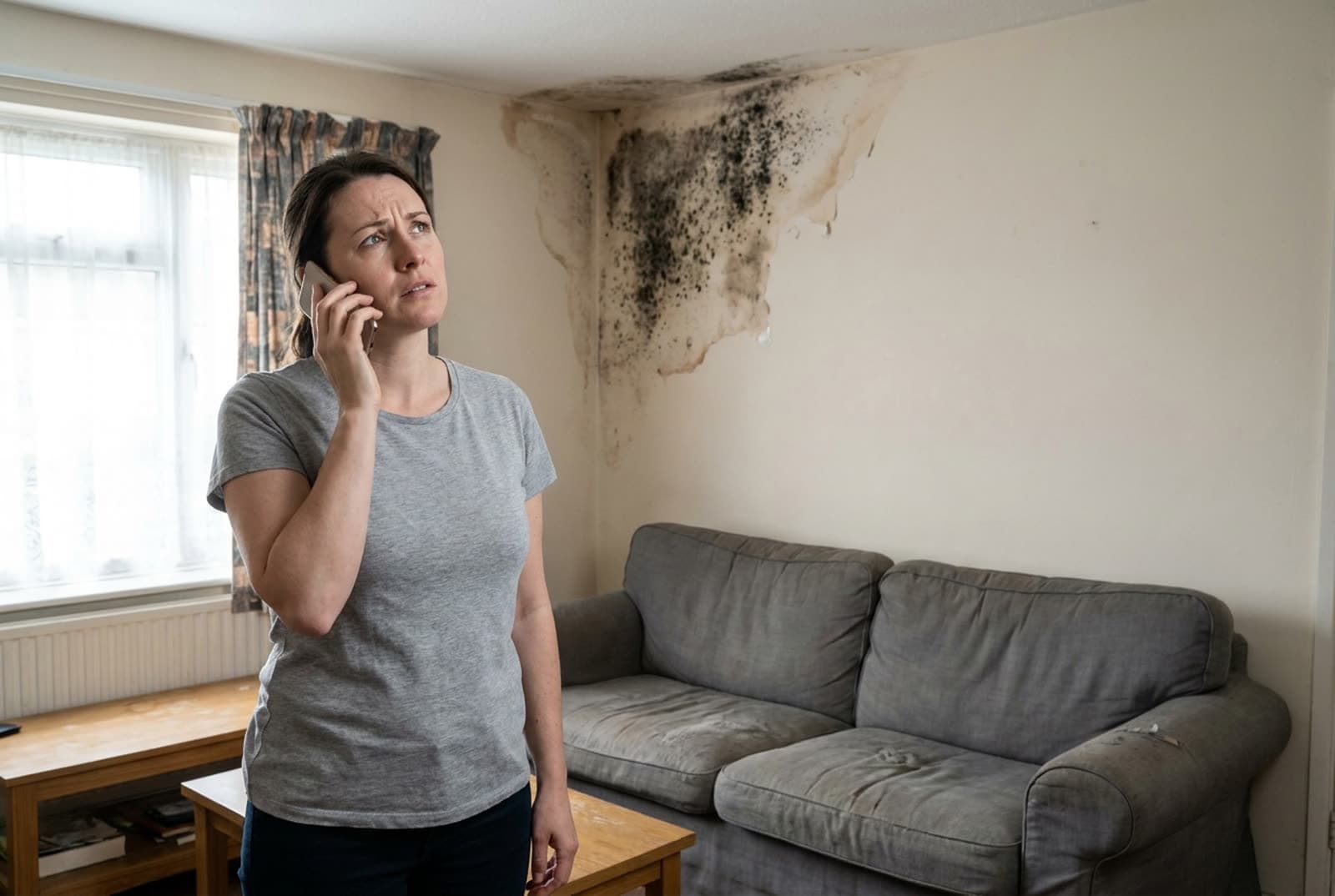
Mould on window frames usually means condensation, poor ventilation, or failed seals. Your landlord may still be responsible. Here is what to do.
On this page
In short
Black mould on window frames and seals is common and is usually caused by condensation, poor ventilation, or failed window seals. It is not always your fault. Your landlord may still be responsible. Here is what to do, and when to call us.
Key facts
- The 2024 to 2025 English Housing Survey found serious condensation (3% of homes) was more common than penetrating damp (2%) or rising damp (1%). English Housing Survey 2024-25, GOV.UK
- Official guidance from the UK Health Security Agency and the Department of Health and Social Care links damp and mould in homes in England to around 5,000 cases of asthma and 8,500 lower respiratory infections among children and adults. Health risks of damp and mould, GOV.UK
Why it happens
- Condensation that has nowhere to go (no extractor or air vents).
- Cold windows that bring warm, damp air to a dew point.
- Failed seals letting moist air into the glass unit.
- Single-glazing that is much colder than the rest of the home.
When it is your landlord's responsibility
Under Section 11 of the Landlord and Tenant Act 1985, your landlord must keep the structure and exterior in repair. That can include windows that have failed, broken seals, and missing trickle vents. Under the Homes (Fitness for Human Habitation) Act 2018, your home must be fit to live in. Persistent mould affecting health is usually not.
What to do
- Take dated photos of the mould, including the surrounding window and walls.
- Note if your windows are single-glazed, draughty, or have failed seals.
- Report it in writing to your landlord and ask for an inspection.
- Mention any health impact in the home, especially for children, the elderly or anyone with asthma.
See is condensation the landlord's fault or mine and broken extractor fan and poor ventilation.
How we can help
If your landlord has ignored mould on window frames, or failed window seals, you may have a claim. Call us free on 0800 030 4669.
Free call: 0800 030 4669 | Start your claim
Sources
- Section 11, Landlord and Tenant Act 1985 (legislation.gov.uk)
- Homes (Fitness for Human Habitation) Act 2018 (legislation.gov.uk)
We review every guide at least twice a year and update it when the law changes. If you spot something out of date or wrong, email help@supportfortenants.co.uk.
Reviewed against current housing law for England and Wales as at 28 May 2026. Checked by our SRA-regulated panel solicitors. This is general information, not legal advice for your specific case. Any compensation figures or ranges shown are illustrative only, not a promise; every case is different.
Related guides
Can I sue my landlord for mould?
Yes. If your landlord ignores damp and mould, you can claim. Here is the law and how it works.
Read
How to report damp to your landlord (and make it stick)
The exact steps to report damp in writing, what evidence to keep, and what your landlord must do under Awaab's Law. 5-minute read.
Read
Is condensation the landlord's fault or mine?
Often the landlord's. If condensation comes from poor ventilation, cold walls, or a building fault, it is their job to fix. Here is how to tell.
Read
Still stuck?
Call us free or start a claim online. We'll tell you honestly whether you have a case worth pursuing.