
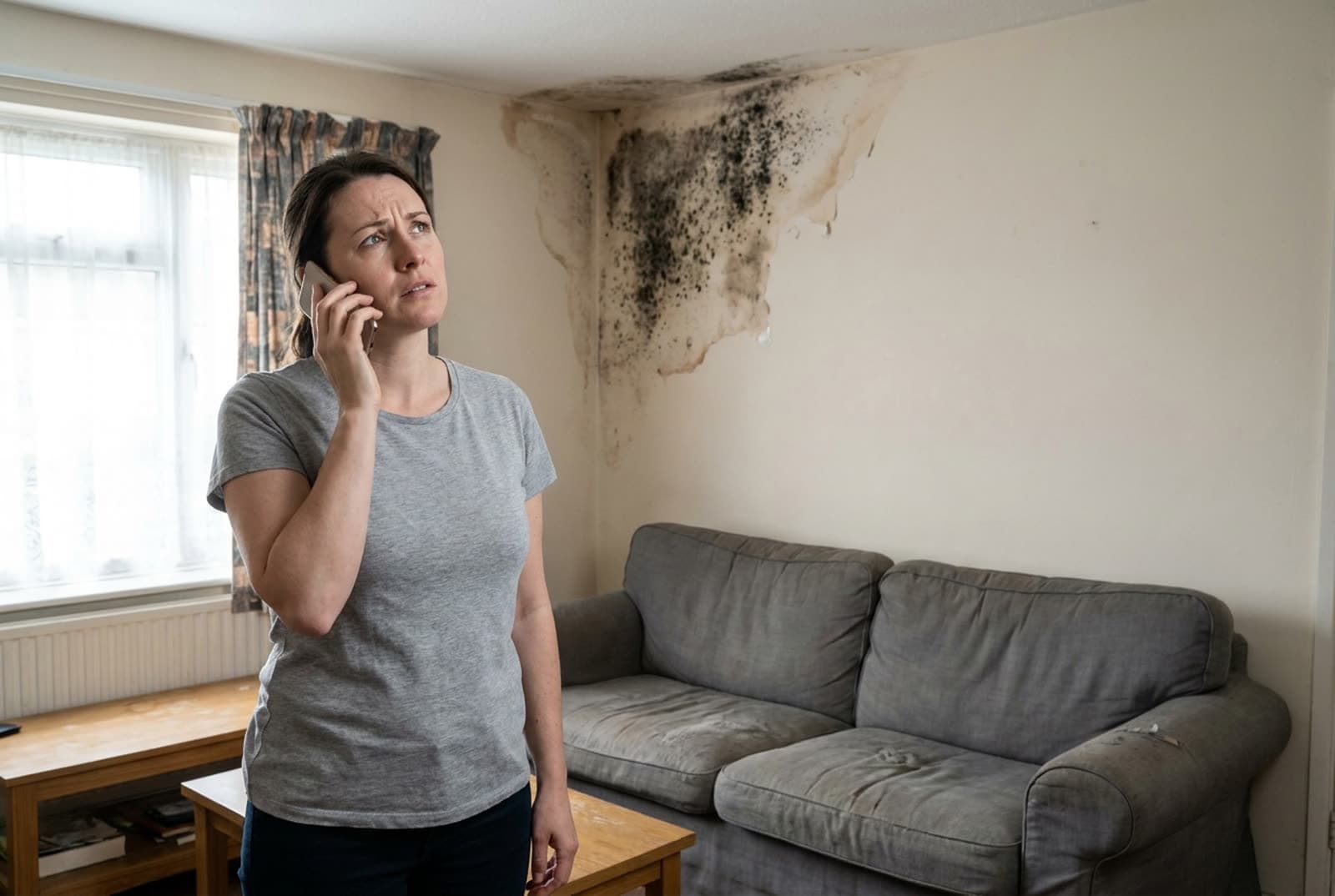
Mould is not always easy to spot. It grows behind wardrobes, under carpets, inside cupboards, and behind large furniture set against cold walls. By the time
On this page
- Key facts
- Why does mould grow behind furniture?
- How do I know if the mould is caused by the property or my behaviour?
- What should I do if I find hidden mould?
- Can the landlord blame me for mould behind my furniture?
- Can I claim compensation for mould that was hidden when I moved in?
- When should I contact Support for Tenants?
- Sources
- Related articles
Mould is not always easy to spot. It grows behind wardrobes, under carpets, inside cupboards, and behind large furniture set against cold walls. By the time you find it, months may have passed. Here is what hidden mould means for tenants, and how to handle it.
Key facts
- The 2024 to 2025 English Housing Survey found about 5% of homes in England, around 1.4 million, had a problem with damp, most common in privately rented homes (10%). English Housing Survey 2024-25, GOV.UK
- Official guidance from the UK Health Security Agency and the Department of Health and Social Care links damp and mould in homes in England to around 5,000 cases of asthma and 8,500 lower respiratory infections among children and adults. Health risks of damp and mould, GOV.UK
Why does mould grow behind furniture?
Picture a cold surface, an outside wall say, covered by furniture blocking the airflow. Moisture condenses on it, and mould grows in the damp, airless space behind. It happens most:
- In older homes with solid walls, which carry cold more than insulated ones
- In rooms with poor heating or ventilation
- Where furniture presses hard against outside walls
Mould behind furniture often gets blamed on the tenant: how they heat or air the home. But a cold, poorly insulated structure underneath puts it with the landlord.
How do I know if the mould is caused by the property or my behaviour?
Hard to judge without a survey. But some signs point structural:
- Mould in steady patterns along cold walls, however much you ventilate
- Mould in several rooms with no clear cause
- Mould on walls and ceilings, not just condensation-catching surfaces like windows and tiles
- A home staying cold with the heating running, pointing to poor insulation
A surveyor can weigh the cause and write up what is responsible.
What should I do if I find hidden mould?
- Photograph it straight away, dated and located. It proves when you found it and how bad it ran.
- Report it in writing: an email or letter describing what you found. Keep a copy.
- Pull the furniture off the wall for now, letting the surface dry. Clean the mould with the right products: diluted bleach, or a shop-bought mould cleaner.
- Air the room: windows open when you can, above all in kitchens and bathrooms.
- Watch for its return: mould coming back despite your efforts points structural.
Can the landlord blame me for mould behind my furniture?
They may try. Landlords often pin mould on condensation from the tenant's lifestyle. The argument has limits. A home cold, poorly insulated, or structurally damp leaves no room to simply blame the tenant. An independent survey usually settles the cause.
A landlord denying responsibility leaves environmental health, or a housing disrepair claim.
Can I claim compensation for mould that was hidden when I moved in?
Mould may have hidden behind furniture when you moved in. You could not have known; the landlord may have. Even where they did not, their duties under the Homes (Fitness for Human Habitation) Act 2018 and Section 11 of the Landlord and Tenant Act 1985 run from when the problem could reasonably have been found and reported.
A problem reported and left unfixed, or one a proper inspection should have caught, may support a claim.
When should I contact Support for Tenants?
Found mould, hidden or visible, that the landlord has not fixed? Call us.
Call us on 0800 030 4669. No upfront cost. You only pay if you win, and the fee comes out of the compensation, not your pocket. If you don't win, you pay nothing.
Sources
- Landlord and Tenant Act 1985, Section 11 (legislation.gov.uk)
- Homes (Fitness for Human Habitation) Act 2018 (legislation.gov.uk)
- Understanding and addressing the health risks of damp and mould in the home (GOV.UK)
Related articles
We review every guide at least twice a year and update it when the law changes. If you spot something out of date or wrong, email help@supportfortenants.co.uk.
Reviewed against current housing law for England and Wales as at 15 June 2026. Checked by our SRA-regulated panel solicitors. This is general information, not legal advice for your specific case. Any compensation figures or ranges shown are illustrative only, not a promise; every case is different.
Related guides
Can I sue my landlord for mould?
Yes. If your landlord ignores damp and mould, you can claim. Here is the law and how it works.
Read
How to report damp to your landlord (and make it stick)
The exact steps to report damp in writing, what evidence to keep, and what your landlord must do under Awaab's Law. 5-minute read.
Read
Is condensation the landlord's fault or mine?
Often the landlord's. If condensation comes from poor ventilation, cold walls, or a building fault, it is their job to fix. Here is how to tell.
Read
Still stuck?
Call us free or start a claim online. We'll tell you honestly whether you have a case worth pursuing.