
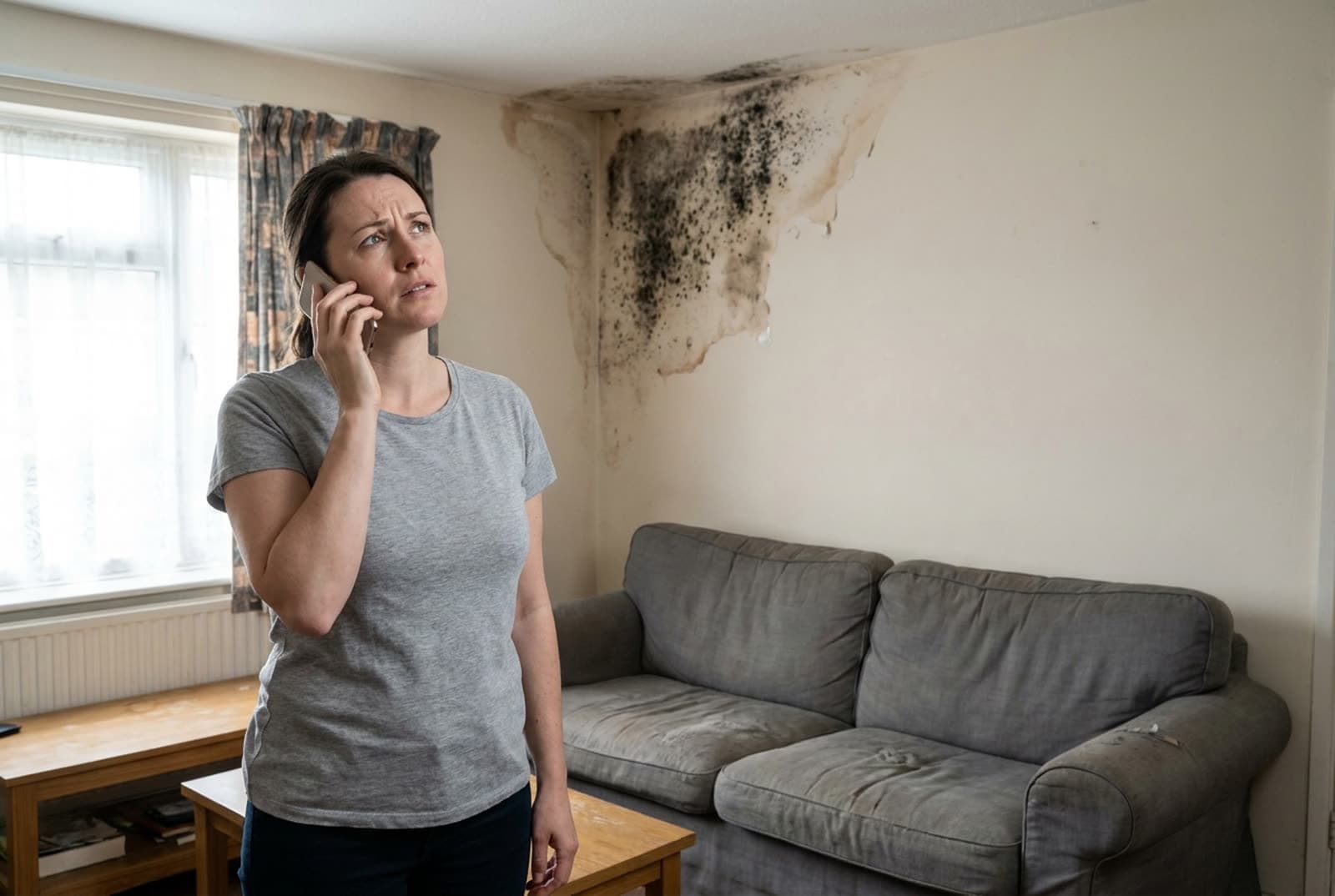
Rising damp travels up from the ground into the walls of a building. It differs from condensation and penetrating damp. Naming it right matters when deciding
On this page
Rising damp travels up from the ground into the walls of a building. It differs from condensation and penetrating damp. Naming it right matters when deciding the repair, and who owns it. Here is what rising damp is, how to spot it, and what your landlord must do.
Key facts
- The 2024 to 2025 English Housing Survey found serious condensation (3% of homes) was more common than penetrating damp (2%) or rising damp (1%). English Housing Survey 2024-25, GOV.UK
- The same survey found about 5% of homes in England, around 1.4 million, had a problem with damp, most common in privately rented homes (10%). English Housing Survey 2024-25, GOV.UK
What is rising damp?
Rising damp happens when ground moisture gets drawn up through a wall. It usually holds to the lower part, up to about one metre from the floor. Older homes built without a damp-proof course, or where the course failed, see it most.
A damp-proof course, a DPC, is a flat barrier built into a wall to stop ground moisture rising. Usually it is a plastic, slate, or lead layer along the wall's base. A missing or cracked DPC invites rising damp. So does a raised outside ground level bridging over it.
Signs of rising damp
- Tide marks: a visible line above the skirting board where moisture rose and left salts behind
- White powdery deposits on the wall, salts drawn up by the moisture
- Damp or cold patches low on inside walls
- Peeling wallpaper or flaking plaster low in a room
- Skirting boards damp, swollen, or rotting
- A musty smell down low
Rising damp usually keeps to the lower metre of a wall. Damp higher up points more to penetrating damp, water coming in from outside, or condensation.
Is rising damp the landlord's responsibility?
Yes, in most cases. Under Section 11 of the Landlord and Tenant Act 1985, the landlord must keep the structure and outside of the home in repair. A failing DPC, or none where one is needed, is a structural defect. The law gives no option to leave rising damp be.
The Homes (Fitness for Human Habitation) Act 2018 also requires rented homes to be fit to live in. Damp that keeps hurting walls, breeding mould, or souring the home may make it unfit.
What should the landlord do?
The usual remedies for rising damp include:
- Replacing or fitting a damp-proof course, by chemical injection into the wall or by slotting in a DPC membrane
- Replastering the lower wall with salt-resistant plaster after any damp treatment
- Checking outside ground levels, and lowering any that bridge the existing DPC
Cosmetic fixes, like painting over the patch, touch nothing underneath and never last.
What if my landlord refuses to act?
- Report in writing and keep a copy of your message and any reply.
- Photograph the affected areas, date-stamped where possible.
- No response, or a refusal? Contact the council's environmental health team. They can inspect under the HHSRS rating system. Where the damp risks health, they can serve an improvement notice.
- A housing disrepair claim may stand too. It seeks compensation for the time lived with the problem, plus an order forcing the repairs.
When should I contact Support for Tenants?
Rising damp the landlord never fixed? Call us to find out whether a claim stands.
Call us on 0800 030 4669. No upfront cost. You only pay if you win, and the fee comes out of the compensation, not your pocket. If you don't win, you pay nothing.
Sources
- Section 11, Landlord and Tenant Act 1985 (legislation.gov.uk)
- Homes (Fitness for Human Habitation) Act 2018 (legislation.gov.uk)
- Housing Health and Safety Rating System (HHSRS) guidance (GOV.UK)
We review every guide at least twice a year and update it when the law changes. If you spot something out of date or wrong, email help@supportfortenants.co.uk.
Reviewed against current housing law for England and Wales as at 15 June 2026. Checked by our SRA-regulated panel solicitors. This is general information, not legal advice for your specific case. Any compensation figures or ranges shown are illustrative only, not a promise; every case is different.
Related guides
Can I sue my landlord for mould?
Yes. If your landlord ignores damp and mould, you can claim. Here is the law and how it works.
Read
How to report damp to your landlord (and make it stick)
The exact steps to report damp in writing, what evidence to keep, and what your landlord must do under Awaab's Law. 5-minute read.
Read
Is condensation the landlord's fault or mine?
Often the landlord's. If condensation comes from poor ventilation, cold walls, or a building fault, it is their job to fix. Here is how to tell.
Read
Still stuck?
Call us free or start a claim online. We'll tell you honestly whether you have a case worth pursuing.