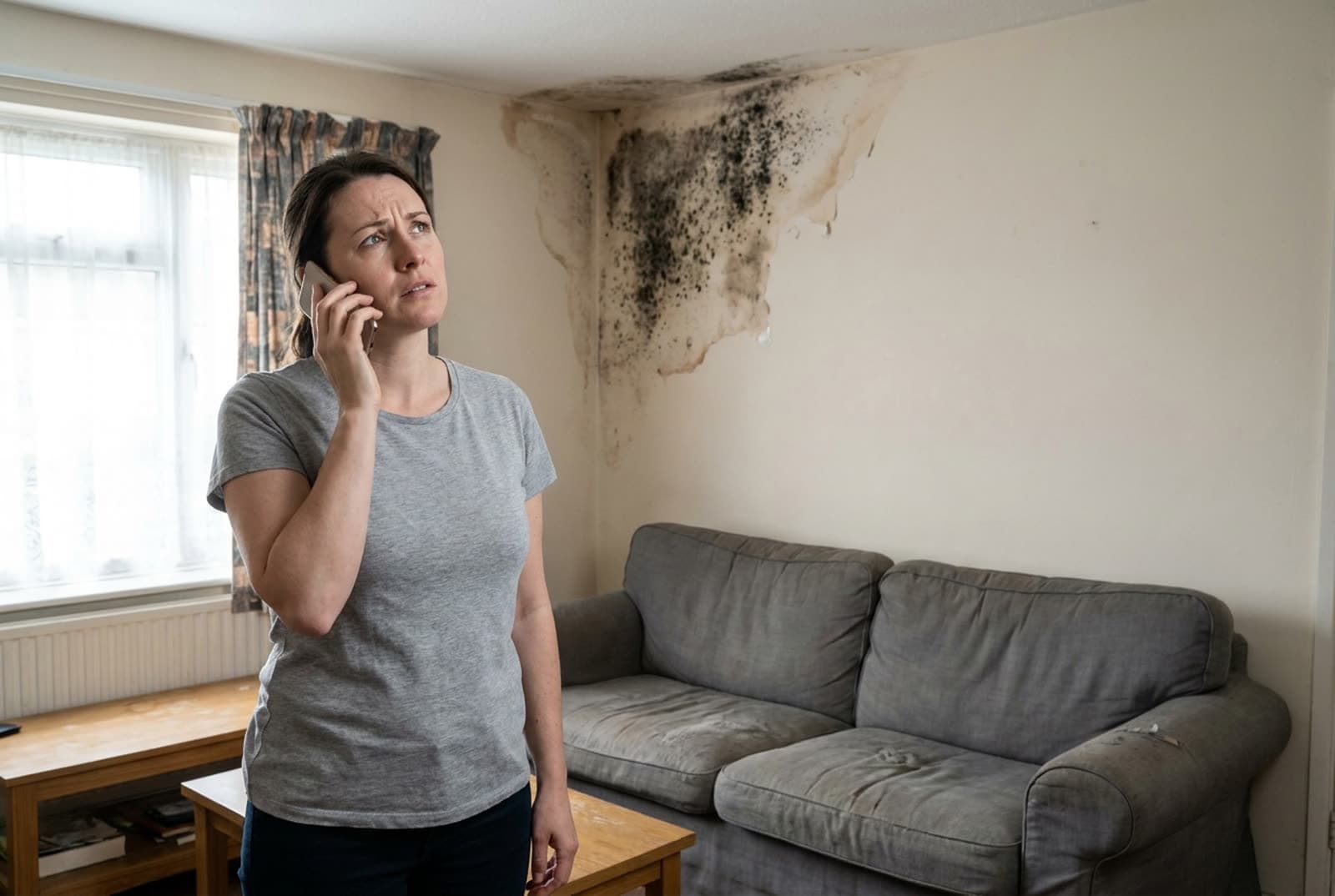
A damp or mouldy home does not just harm your body. The toll on your mind can run deep and last. Below: how poor housing hits mental health, and your rights
On this page
A damp or mouldy home does not just harm your body. The toll on your mind can run deep and last. Below: how poor housing hits mental health, and your rights where damp and mould caused you distress. Government guidance recognises that damp and mould harm mental health as well as physical health.
Key facts
- Official guidance from the UK Health Security Agency and the Department of Health and Social Care links damp and mould in homes in England to around 5,000 cases of asthma and 8,500 lower respiratory infections among children and adults. Health risks of damp and mould, GOV.UK
- The 2024 to 2025 English Housing Survey found about 5% of homes in England, around 1.4 million, had a problem with damp, most common in privately rented homes (10%). English Housing Survey 2024-25, GOV.UK
How does living with damp and mould affect mental health?
Living with damp and mould, month after month, is stressful in itself. Common effects:
Anxiety and worry: fear for your health and your children's, plus frustration at a landlord doing nothing, breeds a steady, low hum of anxiety. Many tenants describe thinking about the state of their home constantly.
Depression: a home that feels unsafe, unclean or grim drags mood down. People in poor housing report more depression than the wider population, and feeling powerless makes it worse.
Broken sleep: damp brings smells, discomfort and worse breathing at night, all of which wreck sleep. Poor sleep then wears down mood, thinking and resilience.
Shame and withdrawal: tenants with mould often feel unable to have friends or family round, or feel the home's state reflects on them. Isolation follows, and mental health slides further.
Harm to children: an unsafe, uncomfortable home shapes a child's feelings and behaviour. Children in damp homes show more anxiety and struggle more at school.
Why is this particularly serious for some tenants?
People already living with depression, anxiety, PTSD or psychosis are hit harder by poor housing. Damp and mould can unsettle a condition that was managed, make treatment harder to keep up, and drain the energy for self-care.
For these tenants, disrepair is not just inconvenient. It can be clinically serious.
Can mental health harm be claimed in a housing disrepair case?
Yes. Mental health harm, including diagnosed or diagnosable anxiety or depression, counts as personal injury in a disrepair claim. Where a landlord knew about damp or mould, failed to fix it, and your mental health worsened as a result, you can claim for that harm.
Evidence matters: a note from your doctor, mental health worker or therapist linking the housing to your mental health. Courts weigh it seriously when setting compensation.
What should I do?
See your doctor: tell them the housing is affecting your mental health, and ask them to note the link in your records.
Report the disrepair in writing: the landlord must know about the damp and mould, and get a fair chance to fix it, before any claim. Write, describe the problem, keep a copy.
Keep a diary: short, dated notes on how the damp and mould touch your days: mood, sleep, rooms you cannot use, stress.
Get support: if you are struggling, contact your doctor or a mental health service. You should not carry this alone.
When should I contact Support for Tenants?
If damp or mould has harmed your mental health and your landlord has not fixed it, call us.
Call us on 0800 030 4669. No upfront cost. You only pay if you win, and the fee comes out of the compensation, not your pocket. If you don't win, you pay nothing.
Sources
- Understanding and addressing the health risks of damp and mould in the home (GOV.UK)
- Landlord and Tenant Act 1985, Section 11 (legislation.gov.uk)
- Homes (Fitness for Human Habitation) Act 2018 (legislation.gov.uk)
Related articles
We review every guide at least twice a year and update it when the law changes. If you spot something out of date or wrong, email help@supportfortenants.co.uk.
Reviewed against current housing law for England and Wales as at 15 June 2026. Checked by our SRA-regulated panel solicitors. This is general information, not legal advice for your specific case. Any compensation figures or ranges shown are illustrative only, not a promise; every case is different.
Related guides
Can I sue my landlord for mould?
Yes. If your landlord ignores damp and mould, you can claim. Here is the law and how it works.
Read
How to report damp to your landlord (and make it stick)
The exact steps to report damp in writing, what evidence to keep, and what your landlord must do under Awaab's Law. 5-minute read.
Read
Is condensation the landlord's fault or mine?
Often the landlord's. If condensation comes from poor ventilation, cold walls, or a building fault, it is their job to fix. Here is how to tell.
Read
Still stuck?
Call us free or start a claim online. We'll tell you honestly whether you have a case worth pursuing.