
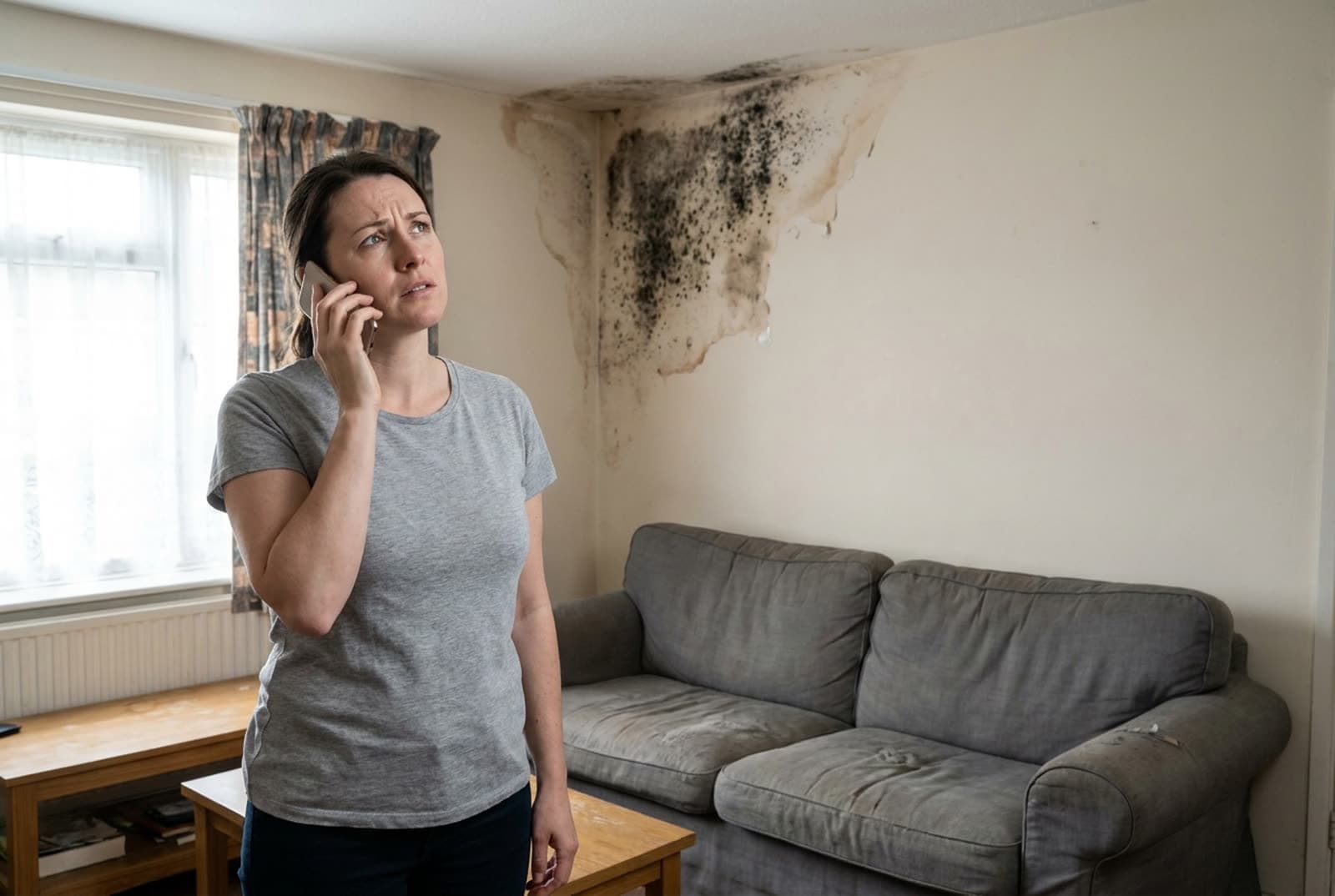
Condensation is moisture from the air settling on cold surfaces. Damp is water getting in through a fault: a leak, rising damp, or penetrating damp. The
On this page
In short
Condensation is moisture from the air settling on cold surfaces. Damp is water getting in through a fault: a leak, rising damp, or penetrating damp. The difference matters because damp from a structural fault is the landlord's to fix by law. Even condensation can be their duty, where poor ventilation or heating causes it. Report any moisture problem that will not clear, in writing.
Tenants and landlords often disagree over whether a moisture problem is condensation or damp. The stakes: landlords sometimes argue condensation comes from the tenant's lifestyle, while damp born of structural faults sits plainly with the landlord.
Here is the difference, how to tell one from the other, and your rights. Government guidance warns that the breathing effects of damp and mould "can cause serious illness and, in the most severe cases, death."
Key facts
- The 2024 to 2025 English Housing Survey found serious condensation (3% of homes) was more common than penetrating damp (2%) or rising damp (1%). English Housing Survey 2024-25, GOV.UK
- The Housing Ombudsman's 2021 report "Spotlight on damp and mould: it's not lifestyle" called on landlords to stop automatically blaming tenants' lifestyle for damp and mould. Housing Ombudsman, Spotlight on damp and mould
What is condensation?
Condensation forms when moist air meets a cold surface. The air cannot hold the moisture, so it turns into droplets on walls, windows and ceilings. The same thing happens to a cold glass on a warm day.
In homes it runs worst in winter. Walls are cold, and people cook, bathe and breathe indoors with the windows shut. It usually appears:
- On windows and window frames
- On cold outside walls, especially in corners
- In bathrooms and kitchens
- In poorly ventilated areas
Condensation can breed black mould, above all in corners and on north-facing walls.
What is penetrating damp?
Penetrating damp is water entering through the structure: walls, roof, windows or floor. It comes from outside, not from moisture made indoors. Signs:
- Damp patches that appear, or worsen, after rain
- Tide marks or staining where rain has hit
- Damp on outside walls, beyond the corners where condensation usually sits
- Musty smells
- Damaged plaster or paint
Penetrating damp is always structural. Fixing it falls to the landlord.
What is rising damp?
Rising damp is water climbing from the ground through the walls. It usually means no working damp-proof course, or one that failed. Signs:
- A tide mark at a steady height, usually within a metre of the floor
- White salt deposits on the wall surface
- Peeling wallpaper or paint low down
- Damaged skirting boards
Rising damp is structural too, and the landlord's to fix.
Is condensation the tenant's fault?
Landlords sometimes claim every mould and moisture problem is condensation, and the tenant's fault: cooking, showering, drying clothes, windows kept shut.
This is not always correct. The law recognises that:
- The home must cope with normal moisture. A home can run so poorly insulated or ventilated that ordinary daily life breeds mould whatever you do. That is a structural failure, not a lifestyle problem. Under the Homes (Fitness for Human Habitation) Act 2018, a home must be free of excess moisture and properly ventilated.
- The Housing Health and Safety Rating System, the HHSRS, rates serious damp and mould as a Category 1 hazard. Councils and courts weigh whether the building itself feeds the problem, not just what the tenant does.
- The landlord must provide proper heating and ventilation. Faulty heating, or missing extractor fans where they are needed, leaves the landlord no room to blame the tenant for the moisture that follows.
How can I tell which type of moisture problem I have?
Some useful tests:
Where does it appear? Condensation favours corners, cold outside walls, and north-facing surfaces. Penetrating damp follows the rain, and the building's faults.
Does wet weather worsen it? Worse after heavy rain points to penetrating damp, not condensation.
Is it at a steady height? A tide mark at a steady height near the floor points to rising damp.
Has the landlord had a survey? Believe the problem is structural? Ask the landlord to arrange an independent damp survey. A refusal can go to the council's environmental health team.
What if the landlord blames my lifestyle?
Told the problem is condensation caused by how you live? Never accept it without question. You are entitled to:
- Ask for a damp survey by an independent professional
- Report the problem to the council's environmental health team, which can inspect and assess it
- Get legal advice where the problem looks structural and the landlord sits still
Evidence is key. Take photos. Note when the problem worsens, and whether rain came first. Keep records of everything sent to the landlord.
What are my rights?
Your landlord has a legal duty to:
- Keep the structure and outside of the home in repair: roof, walls, windows
- Keep the home free of excess moisture
- Provide proper ventilation
- Make sure the home is fit for human habitation
A moisture or mould problem the landlord keeps failing to sort may support a housing disrepair claim.
When should I contact Support for Tenants?
Damp or mould in your rented home, with the underlying problem still unfixed? Call us.
Call us on 0800 030 4669. No upfront cost. You only pay if you win, and the fee comes out of the compensation, not your pocket. If you don't win, you pay nothing.
Sources
- Understanding and addressing the health risks of damp and mould in the home (GOV.UK)
- Landlord and Tenant Act 1985, Section 11 (legislation.gov.uk)
- Homes (Fitness for Human Habitation) Act 2018 (legislation.gov.uk)
Related articles
We review every guide at least twice a year and update it when the law changes. If you spot something out of date or wrong, email help@supportfortenants.co.uk.
Reviewed against current housing law for England and Wales as at 15 June 2026. Checked by our SRA-regulated panel solicitors. This is general information, not legal advice for your specific case. Any compensation figures or ranges shown are illustrative only, not a promise; every case is different.
Related guides
Can I sue my landlord for mould?
Yes. If your landlord ignores damp and mould, you can claim. Here is the law and how it works.
Read
How to report damp to your landlord (and make it stick)
The exact steps to report damp in writing, what evidence to keep, and what your landlord must do under Awaab's Law. 5-minute read.
Read
Is condensation the landlord's fault or mine?
Often the landlord's. If condensation comes from poor ventilation, cold walls, or a building fault, it is their job to fix. Here is how to tell.
Read
Still stuck?
Call us free or start a claim online. We'll tell you honestly whether you have a case worth pursuing.