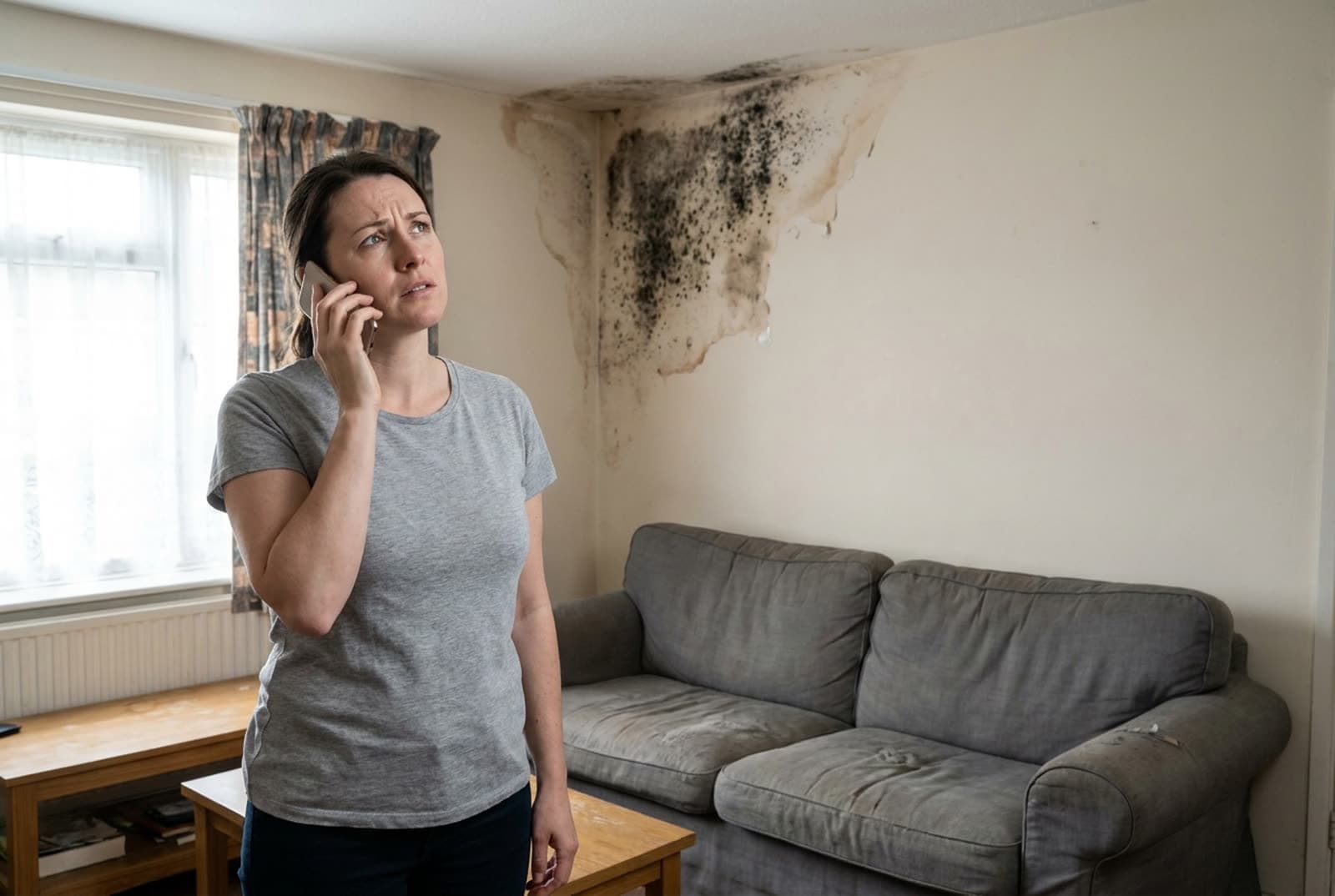
Living with damp and mould harms health at any time. During pregnancy the risks are greater. Here is why damp and mould are more dangerous during pregnancy.
On this page
- Key facts
- Why is damp and mould more dangerous during pregnancy?
- Does cold as well as damp matter?
- What is the landlord required to do?
- Can I ask for urgent repairs because I am pregnant?
- What if my landlord does nothing?
- Does disrepair during pregnancy affect my priority for rehousing?
- When should I contact Support for Tenants?
- Sources
- Related articles
Living with damp and mould harms health at any time. During pregnancy the risks are greater. Here is why damp and mould are more dangerous during pregnancy. We cover what your landlord must do, and how to take action if the problem is not fixed. Government guidance names pregnant women among those most vulnerable to the health effects of damp and mould.
Key facts
- Official guidance from the UK Health Security Agency and the Department of Health and Social Care links damp and mould in homes in England to around 5,000 cases of asthma and 8,500 lower respiratory infections among children and adults. Health risks of damp and mould, GOV.UK
- The 2024 to 2025 English Housing Survey found about 5% of homes in England, around 1.4 million, had a problem with damp, most common in privately rented homes (10%). English Housing Survey 2024-25, GOV.UK
Why is damp and mould more dangerous during pregnancy?
During pregnancy, the immune system changes so the body does not reject the growing baby. This can leave pregnant women more open to infections. That includes infections triggered or made worse by damp and mould. The possible effects include:
Breathing problems: Mould spores inflame the airways and can trigger or worsen asthma. Poorly managed asthma during pregnancy is linked to risks. These include low birth weight, premature birth, and pre-eclampsia.
Higher infection risk: Living in a cold, damp home raises the risk of chest infections and pneumonia. Serious infections during pregnancy can affect both the mother and the baby.
Stress and poor sleep: Living with ongoing disrepair and a landlord who will not respond is stressful. Add the discomfort of cold, damp rooms, and sleep and mental wellbeing can suffer. Long-running stress during pregnancy has been linked to poorer birth outcomes.
Exposure to mycotoxins: Some moulds produce mycotoxins. These are chemical byproducts that can harm health. Evidence on their effects in pregnancy is still growing. Even so, cutting mould exposure is a sensible step.
Does cold as well as damp matter?
Yes. Cold homes are a related problem. A damp home is often also poorly insulated or poorly heated. Cold during pregnancy can raise the risk of high blood pressure and other complications.
What is the landlord required to do?
Your landlord has a legal duty to:
- Keep the heating system in working order
- Keep the structure in repair, roof, walls, windows, outside doors, so rain and moisture cannot get in
- Deal with damp caused by structural failure or disrepair
- Keep the property fit for human habitation under the Homes (Fitness for Human Habitation) Act 2018
Damp or mould may be caused by a defect your landlord is responsible for: a leaking roof, a damp outside wall, a failed damp course, a broken heating system. If so, your landlord must repair it. Pregnancy does not change these duties, but it does make them more urgent.
Can I ask for urgent repairs because I am pregnant?
Yes. Write to your landlord. Explain that you are pregnant. Say that the damp, mould, or cold puts your health and your baby's health at risk. Asking for urgent action in writing creates a record of when the landlord knew.
You can also contact your local council's environmental health team. Their officers can inspect rented properties. Where conditions pose a serious risk to health, they can serve improvement notices on landlords. Being pregnant in poor housing can matter when the council weighs how urgent action is.
What if my landlord does nothing?
If you reported the disrepair and the landlord has not acted in a reasonable time, you may be able to bring a claim. A claim can:
- Require the landlord to carry out the repairs
- Bring compensation for the time you lived in poor conditions
You do not need to pay anything upfront to bring a housing disrepair claim. Solicitors acting on a no-win, no-fee basis can advise you at no cost.
Does disrepair during pregnancy affect my priority for rehousing?
Possibly. Are you pregnant and living in conditions that damage your health? You may count as being in priority need if you approach your local council. Councils look at individual circumstances. Being pregnant in a harmful home can be a relevant factor.
Even so, the fastest fix is often to press your disrepair rights and get the landlord to repair the property. That is especially true if you are otherwise settled in the property.
When should I contact Support for Tenants?
Are you pregnant and living in a privately rented home with damp, mould, or heating problems your landlord has not fixed? Call us. Your health, and your baby's health, cannot wait.
Call us on 0800 030 4669. No upfront cost. You only pay if you win, and the fee comes out of the compensation, not your pocket. If you don't win, you pay nothing.
Sources
- Understanding and addressing the health risks of damp and mould in the home (GOV.UK)
- Landlord and Tenant Act 1985, Section 11 (legislation.gov.uk)
- Homes (Fitness for Human Habitation) Act 2018 (legislation.gov.uk)
Related articles
We review every guide at least twice a year and update it when the law changes. If you spot something out of date or wrong, email help@supportfortenants.co.uk.
Reviewed against current housing law for England and Wales as at 15 June 2026. Checked by our SRA-regulated panel solicitors. This is general information, not legal advice for your specific case. Any compensation figures or ranges shown are illustrative only, not a promise; every case is different.
Related guides
Can I sue my landlord for mould?
Yes. If your landlord ignores damp and mould, you can claim. Here is the law and how it works.
Read
How to report damp to your landlord (and make it stick)
The exact steps to report damp in writing, what evidence to keep, and what your landlord must do under Awaab's Law. 5-minute read.
Read
Is condensation the landlord's fault or mine?
Often the landlord's. If condensation comes from poor ventilation, cold walls, or a building fault, it is their job to fix. Here is how to tell.
Read
Still stuck?
Call us free or start a claim online. We'll tell you honestly whether you have a case worth pursuing.