
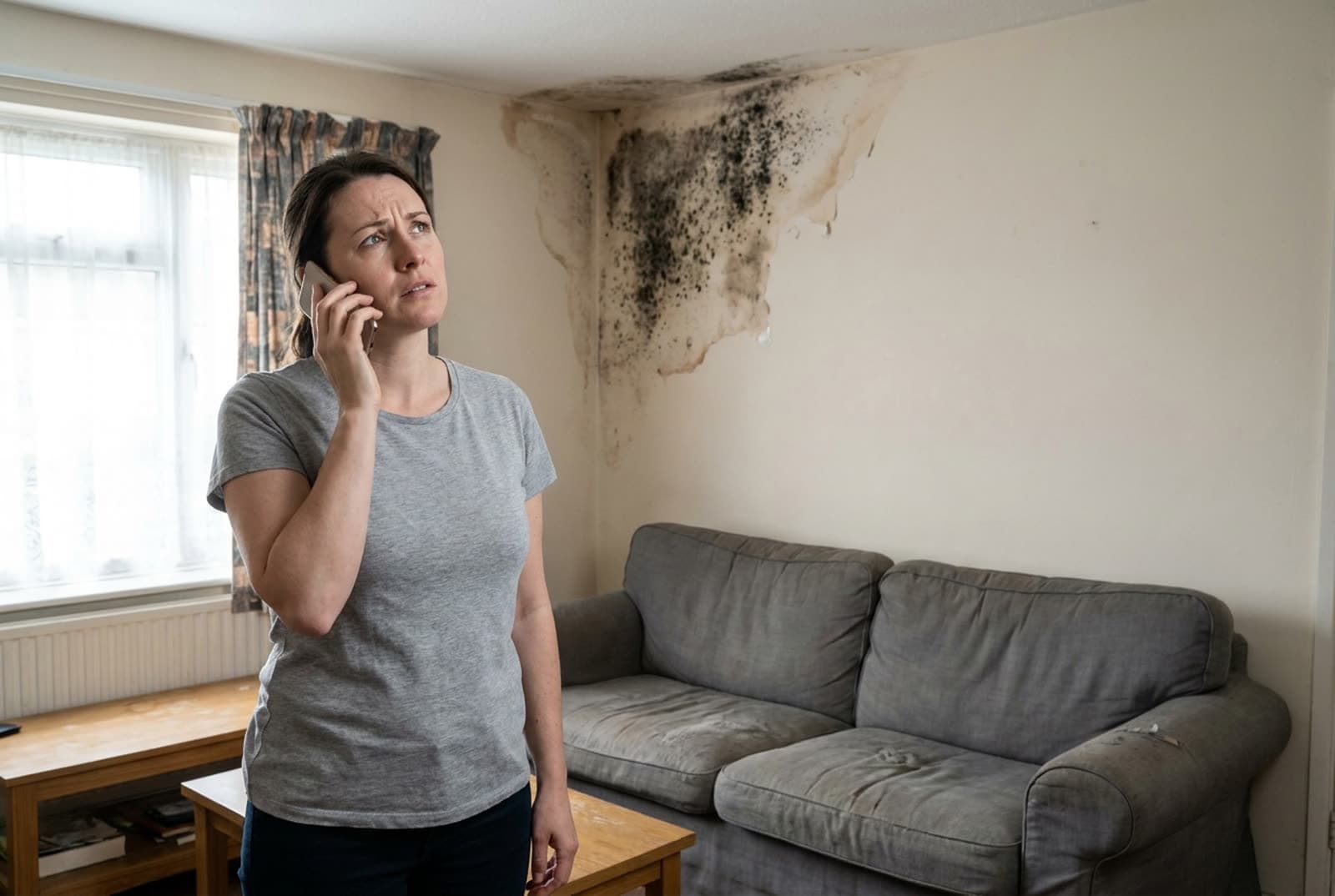
Chronic obstructive pulmonary disease (COPD) is a long-term lung condition that makes breathing hard. Emphysema is one of the main conditions within COPD.
On this page
Chronic obstructive pulmonary disease (COPD) is a long-term lung condition that makes breathing hard. Emphysema is one of the main conditions within COPD. Damp, mould and cold housing hit people with COPD especially hard, and a badly maintained rented home can seriously worsen their health. Government guidance warns that the breathing effects of damp and mould "can cause serious illness and, in the most severe cases, death."
Key facts
- Official guidance from the UK Health Security Agency and the Department of Health and Social Care links damp and mould in homes in England to around 5,000 cases of asthma and 8,500 lower respiratory infections among children and adults. Health risks of damp and mould, GOV.UK
- The 2024 to 2025 English Housing Survey found about 5% of homes in England, around 1.4 million, had a problem with damp, most common in privately rented homes (10%). English Housing Survey 2024-25, GOV.UK
How does damp and mould affect COPD?
COPD damages the airways and the air sacs in the lungs, and that damage is permanent. But how bad the symptoms feel day to day, the breathlessness, coughing, wheezing and phlegm, depends heavily on the surroundings, including what is in the air at home.
Damp and mouldy homes cause problems for people with COPD in several ways:
- Mould spores: growing mould releases spores into the air. Breathing them in irritates already damaged airways, triggering coughing, wheezing and breathlessness.
- Chest infections: damp homes harbour more of the bacteria and viruses that cause them. For someone with COPD, even a mild infection can set off a flare-up: a sudden, severe worsening that often needs hospital treatment.
- Cold air: cold, damp air is harder to breathe. Symptoms are often much worse in cold weather, or in cold, badly heated rooms.
- Poor ventilation: a badly ventilated home traps damp air, spores and other irritants inside, concentrating the very things that trigger symptoms.
Acute exacerbations and hospital admissions
A flare-up (an "acute exacerbation") is a sudden worsening beyond the normal daily ups and downs. In severe COPD a flare-up can be life-threatening, and flare-ups are among the main reasons people with COPD are admitted to hospital as emergencies.
Did your flare-ups or hospital stays line up with cold or damp spells at home? That timing may be evidence linking the housing to your health.
What evidence helps in a claim?
If you have COPD and want to pursue a disrepair claim, useful evidence includes:
- Medical records showing the COPD diagnosis, flare-ups and hospital stays
- A letter from your chest consultant or your doctor confirming the link between the housing and your symptoms
- Records of when the home was especially cold or damp: boiler repair logs, complaints to the landlord, photos of mould
- Your own symptom log: when things are worse, and whether they ease when you are away from the home
What should I do?
- Report the problem to your landlord in writing. Say what is wrong and when you first noticed it. Say that you have COPD.
- Talk to your doctor or chest team. Ask them to note the housing link in your records, and whether they can write a letter you can use as evidence.
- Photograph the problem. Any visible mould, damp patches, or signs of failed heating. Date the photos if you can.
- Follow up if the landlord does not act. The law requires landlords to maintain the structure and installations. Failing to is a breach of duty.
Can I make a housing disrepair claim?
Yes. If your landlord knew about the disrepair, did not fix it, and your health and daily life suffered, you may have a claim. Courts weigh the impact more heavily where someone has a serious underlying condition like COPD.
When should I contact Support for Tenants?
If you have COPD and live in a rented home with damp, mould or cold your landlord has not fixed, call us.
Call us on 0800 030 4669. No upfront cost. You only pay if you win, and the fee comes out of the compensation, not your pocket. If you don't win, you pay nothing.
Sources
- Understanding and addressing the health risks of damp and mould in the home (GOV.UK)
- Landlord and Tenant Act 1985, Section 11 (legislation.gov.uk)
- Homes (Fitness for Human Habitation) Act 2018 (legislation.gov.uk)
- English Housing Survey (GOV.UK)
Related articles
We review every guide at least twice a year and update it when the law changes. If you spot something out of date or wrong, email help@supportfortenants.co.uk.
Reviewed against current housing law for England and Wales as at 15 June 2026. Checked by our SRA-regulated panel solicitors. This is general information, not legal advice for your specific case. Any compensation figures or ranges shown are illustrative only, not a promise; every case is different.
Related guides
Can I sue my landlord for mould?
Yes. If your landlord ignores damp and mould, you can claim. Here is the law and how it works.
Read
How to report damp to your landlord (and make it stick)
The exact steps to report damp in writing, what evidence to keep, and what your landlord must do under Awaab's Law. 5-minute read.
Read
Is condensation the landlord's fault or mine?
Often the landlord's. If condensation comes from poor ventilation, cold walls, or a building fault, it is their job to fix. Here is how to tell.
Read
Still stuck?
Call us free or start a claim online. We'll tell you honestly whether you have a case worth pursuing.