Pest infestations
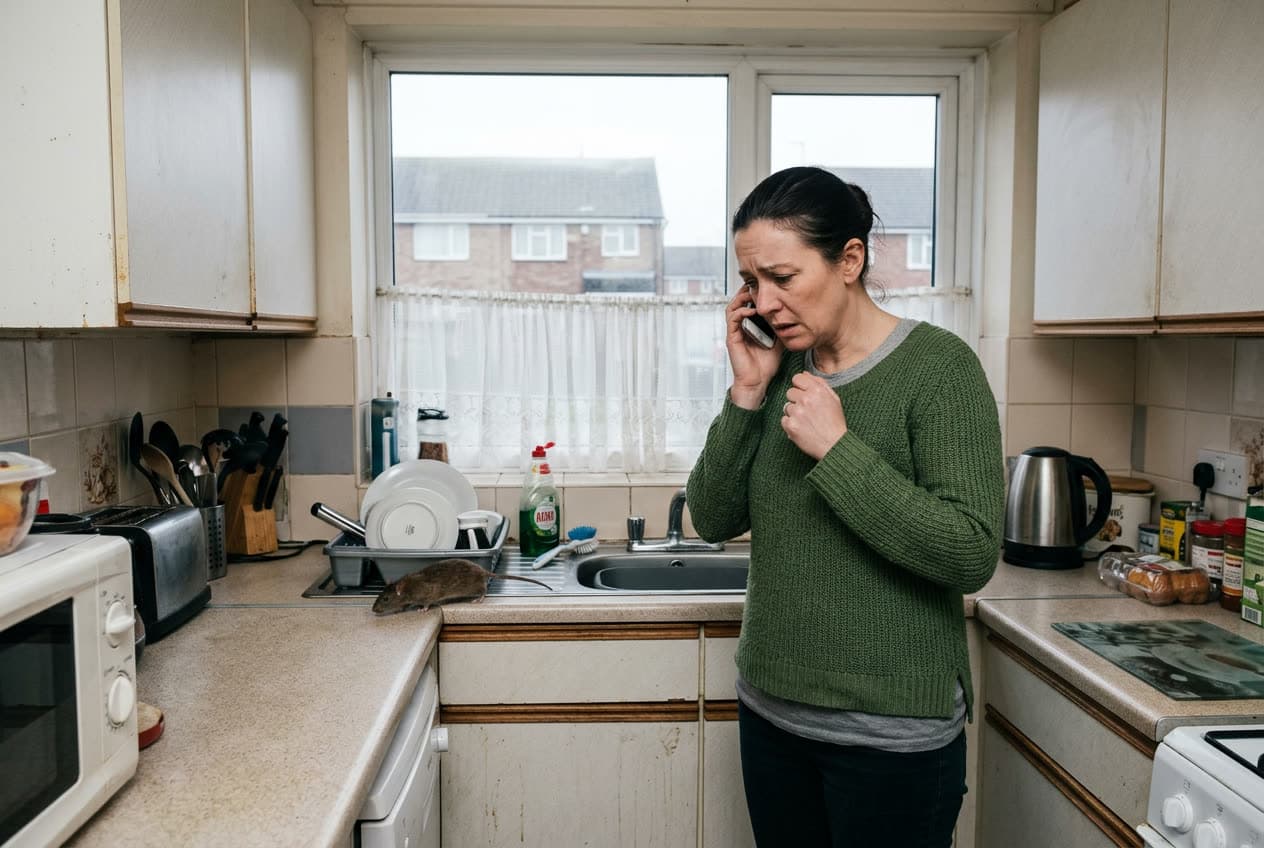
If you have pest infestations in your home, your landlord must put it right by law. For social housing in England, Awaab's Law deadlines for this type of problem are being phased in by 2027. Your landlord's repair duty applies now. How much you could claim depends on how long it lasted, how serious it was, and any effect on your health. There is no fixed timescale, though months rather than days is realistic. No upfront cost. You only pay if you win, and the fee comes out of the compensation, not your pocket. If you don't win, you pay nothing.
England: Section 11 + Environmental Protection Act 1990. Wales: Renting Homes (Wales) Act 2016 repair and fitness duties.
Symptoms
- Droppings on floors, in cupboards, or behind appliances
- Chew marks on food packaging, pipes, or wires
- Insect trails (especially cockroaches, ants, bedbugs)
- Scratching sounds in walls, roof, or under floors
- Recurring infestations even after pest control
Health impact
- Disease transmission (rats can carry Weil's disease; cockroaches trigger asthma)
- Bedbug bites cause sleep deprivation and skin reactions
- Mental health impact of living with vermin
Evidence to gather
- Photograph droppings + chew damage + ANY live sightings
- Keep pest control invoices if you paid yourself
- Note dates of recurrence, if it keeps coming back, the structural cause is your landlord's responsibility
Another route: Environmental Protection Act, Section 82
Active pest infestations qualify as a statutory nuisance. Section 82 of the Environmental Protection Act 1990 lets you go straight to the Magistrates' Court after 21 days written notice, often faster than a civil disrepair claim and runs in parallel.
Read about the EPA Section 82 routeFrequently asked questions
How much money can I claim for pest infestations?
How much you could get depends on how bad it is, how long it went on, and how it affected your health, so we cannot promise a figure. No upfront cost. You only pay if you win, and the fee comes out of the compensation, not your pocket. If you don't win, you pay nothing.
How long does a pest infestations claim take?
There is no fixed time. Months rather than days is realistic, and it depends on your evidence, how your landlord responds, and how complex the problem is. If you rent social housing in England, Awaab's Law (Section 10A LTA 1985, started 27 October 2025) gives your landlord a reasonable time to act. Wales uses the Renting Homes (Wales) Act 2016 instead.
What proof do I need for pest infestations?
Photos and videos with the date on them. A note of when you told your landlord and what they said. A letter from your doctor if anyone has been ill.
Can I claim if I owe rent?
Yes. Owing rent does not stop you making a disrepair claim. They are separate things in law. We will talk through your situation honestly.
Are the council or my landlord responsible for mice and rats?
If the infestation is linked to the building, like holes in the walls, gaps under doors, or drainage problems, it is usually your landlord's job to deal with it, whether that is the council or a housing association. Report it in writing and ask them to find how the pests are getting in, not just lay bait.
How do I report rats or mice to the council?
Report it to your landlord in writing, by email, their online portal, or by phone with a reference number, and keep a copy. Describe the problem and where you have seen the pests. If they do not act, you may have a disrepair claim.
Read more about pest infestations
Put it in writing
A written record helps your case. Copy a free, plain-English template, fill in the brackets, and send it to your landlord.
Related
Pest infestations at your landlord
Repair deadlines and your rights for pest infestations with these social landlords.
Pest infestations where you live
Your rights for pest infestations in these areas.
This is worth a claim
Published decisions show what landlords were made to pay tenants across England in one recent year. A panel solicitor can advise what may be recoverable for pest infestations in an individual claim.
- £5.4m
- compensation ordered for tenants in one year
- 26,901
- orders and recommendations made
- 578
- cases had orders over £2,000
- Almost £32,000
- the largest single order
Figures from the independent statutory review, Annual Complaints Review 2024 to 2025. These are sector-wide outcomes for social housing tenants in England.
Read deeper, Pest infestations
Practical Q&As, legal context, and named case studies on this topic. Every link below is a Support for Tenants page.
By: Support for Tenants editorial team
Last updated:
Reviewed against current housing law for England and Wales as at 15 June 2026. Checked by our SRA-regulated panel solicitors. This is general information, not legal advice for your specific case. Any compensation figures or ranges shown are illustrative only, not a promise; every case is different.