
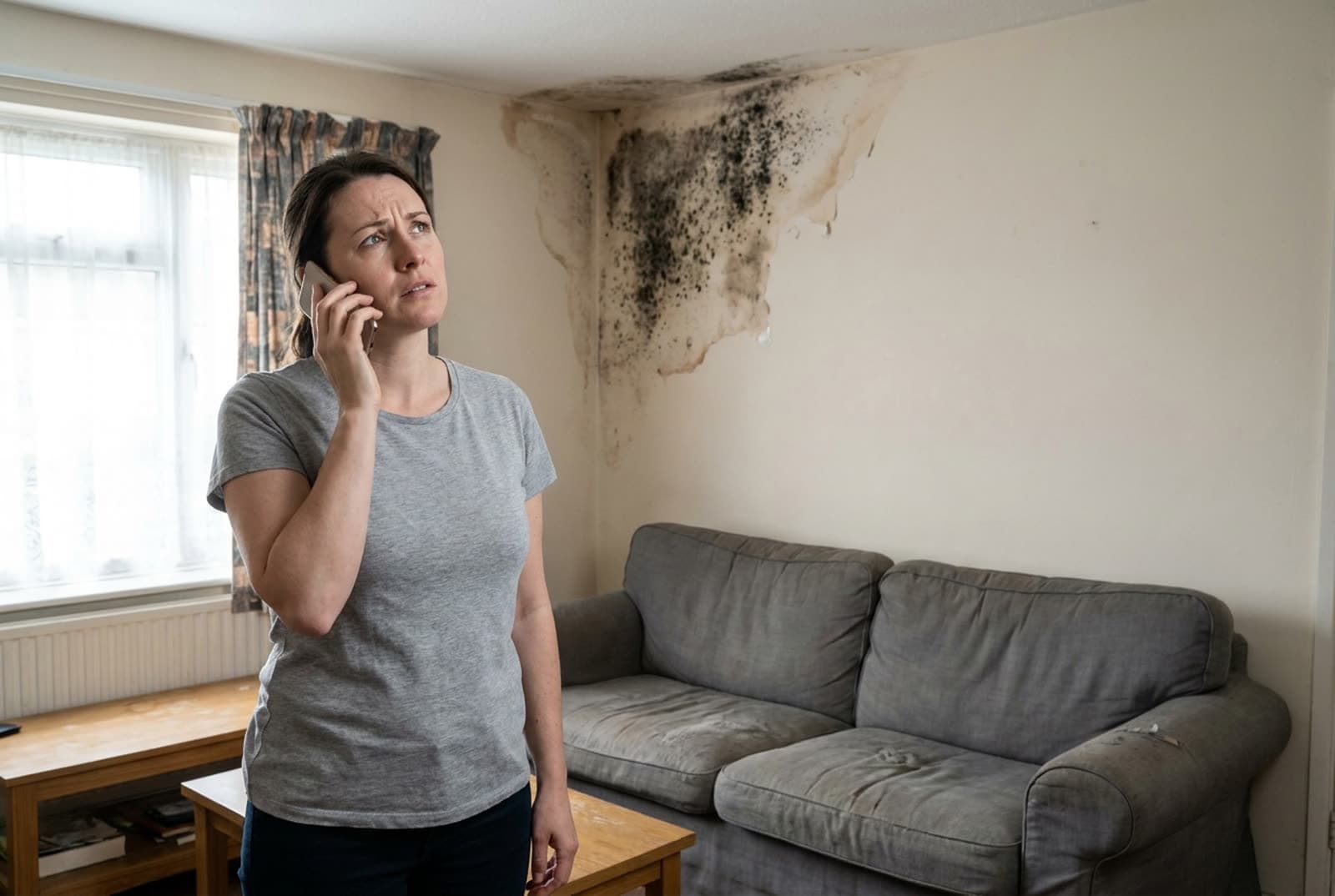
Landlords often blame tenants for damp and mould. Sometimes they are partly right. But a structural cause underneath puts the legal duty on the landlord,
On this page
The short answer
Landlords often blame tenants for damp and mould. Sometimes they are partly right. But a structural cause underneath puts the legal duty on the landlord, however you live. An independent inspection usually settles the argument.
Key facts
- The 2024 to 2025 English Housing Survey found serious condensation (3% of homes) was more common than penetrating damp (2%) or rising damp (1%). English Housing Survey 2024-25, GOV.UK
- The Housing Ombudsman's 2021 report "Spotlight on damp and mould: it's not lifestyle" called on landlords to stop automatically blaming tenants' lifestyle for damp and mould. Housing Ombudsman, Spotlight on damp and mould
What landlords often say
The most common lines landlords use:
- "You are not ventilating properly"
- "You are drying clothes indoors"
- "You are cooking without lids on pots"
- "You need to open the windows more"
These can sometimes feed condensation. But they explain no rising damp, no penetrating damp, and no mould on outside walls, around frames, or in corners that catch no moisture from cooking or showers.
When the landlord's argument fails
Under Section 11 of the Landlord and Tenant Act 1985, the landlord must keep the structure and outside in repair. Damp born of a structural defect, a failed damp-proof course, a leaking roof, failed pointing, faulty guttering, is the landlord's to fix. The duty holds whatever you do inside the home.
A structural cause never becomes a lifestyle cause because the landlord says so. Their opinion is no evidence. An independent inspection is.
The Homes (Fitness for Human Habitation) Act 2018 adds another route. A home unfit to live in through damp can go to the county court. Again, a structural cause makes it the landlord's problem, never yours.
What to do
Get an independent inspection. An independent survey shows whether the damp comes from the structure or purely from condensation. A structural source means the report says so. A surveyor's report carries weight in any complaint or legal process.
Gather evidence of the pattern. Photograph the areas regularly. Note whether the damp runs worst after rain, on cold outside walls, or in rooms with poor airflow. Rising damp favours the base of walls. Penetrating damp follows the water's line in from outside. Condensation favours cold surfaces indoors.
Write to the landlord formally. Evidence in hand, put your position in writing. Say you believe the cause is structural, and ask for a proper investigation rather than cosmetic treatment.
Request an HHSRS inspection. The council's environmental health team can inspect under the rating system. A Category 1 hazard found lets them serve an improvement notice on the landlord.
What if both things are true?
Sometimes both run: a structural defect and a ventilation issue. Even then, the landlord must fix the structural part. Adjusting how you air the home may be asked of you. The landlord's share stays on the hook regardless.
When should I contact Support for Tenants?
Call us where the landlord blames you and the cause looks structural, where a contractor only painted over the mould, or where you want help arranging an independent inspection.
Call us free on 0800 030 4669. No upfront cost. You only pay if you win, and the fee comes out of the compensation, not your pocket. If you don't win, you pay nothing.
Sources
- Landlord and Tenant Act 1985, Section 11 (legislation.gov.uk)
- Homes (Fitness for Human Habitation) Act 2018 (legislation.gov.uk)
- Understanding and addressing the health risks of damp and mould in the home (GOV.UK)
Related articles
We review every guide at least twice a year and update it when the law changes. If you spot something out of date or wrong, email help@supportfortenants.co.uk.
Reviewed against current housing law for England and Wales as at 15 June 2026. Checked by our SRA-regulated panel solicitors. This is general information, not legal advice for your specific case. Any compensation figures or ranges shown are illustrative only, not a promise; every case is different.
Related guides
Can I sue my landlord for mould?
Yes. If your landlord ignores damp and mould, you can claim. Here is the law and how it works.
Read
How to report damp to your landlord (and make it stick)
The exact steps to report damp in writing, what evidence to keep, and what your landlord must do under Awaab's Law. 5-minute read.
Read
Is condensation the landlord's fault or mine?
Often the landlord's. If condensation comes from poor ventilation, cold walls, or a building fault, it is their job to fix. Here is how to tell.
Read
Still stuck?
Call us free or start a claim online. We'll tell you honestly whether you have a case worth pursuing.