
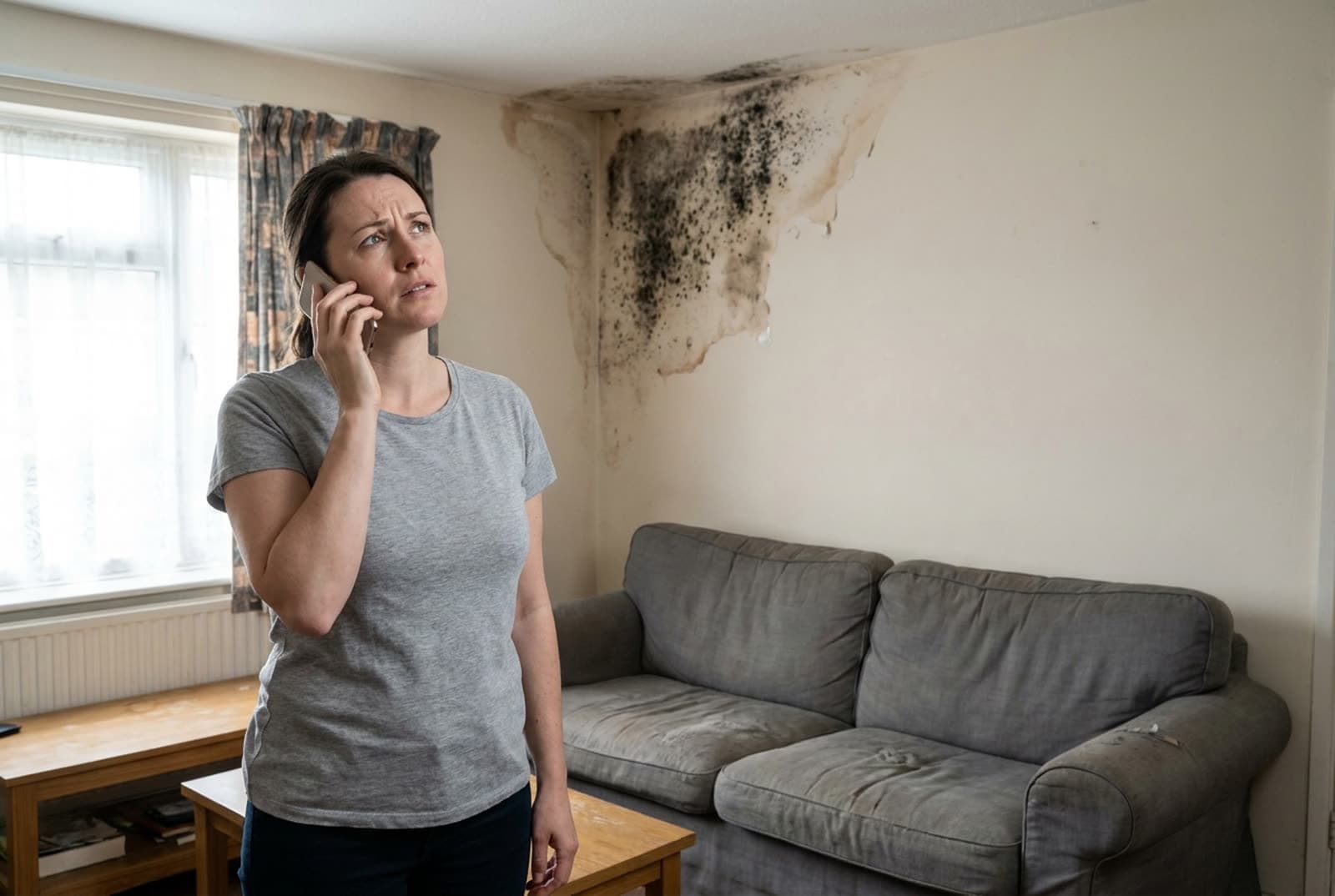
Often, yes. If the mould comes from a fault your landlord must fix, broken extraction, a leak, or ventilation left unfixed, it is their job to deal with. If
On this page
In short
Often, yes. If the mould comes from a fault your landlord must fix, broken extraction, a leak, or ventilation left unfixed, it is their job to deal with. If it comes purely from everyday moisture you can reduce, the picture is mixed. Report it in writing. Once they know and do not act, you may have a claim.
Bathroom mould is one of the most reported housing problems in rented homes. Whether your landlord is responsible depends on the cause. We show you how to tell the difference, and what to do. Government guidance warns that the breathing effects of damp and mould "can cause serious illness and, in the most severe cases, death."
Key facts
- The 2024 to 2025 English Housing Survey found about 5% of homes in England, around 1.4 million, had a problem with damp, most common in privately rented homes (10%). English Housing Survey 2024-25, GOV.UK
- Official guidance from the UK Health Security Agency and the Department of Health and Social Care links damp and mould in homes in England to around 5,000 cases of asthma and 8,500 lower respiratory infections among children and adults. Health risks of damp and mould, GOV.UK
Why does mould appear in bathrooms?
Bathrooms make a lot of moisture: showers, baths, hot running water. If it cannot escape, it condenses on cooler surfaces, and mould grows.
There are two main causes of bathroom mould:
Structural causes (landlord's responsibility):
- Poor or dead ventilation: an extractor fan that does not work, or was never fitted
- Sealed or unventilated windows that cannot be opened
- Cold surfaces from poor insulation
- Leaking pipes or shower seals letting water behind tiles and into walls
- Rising or penetrating damp from next-door areas
Condensation from use (more complex):
- Steam from showers and baths that is not vented well
- Rooms not aired day to day
Even where everyday condensation plays a part, a home with no working extractor fan, or windows that will not open, can still be the landlord's responsibility: the built-in ventilation is not good enough.
Is a landlord required to provide ventilation in a bathroom?
Yes. Building regulations require bathrooms to have proper ventilation. If the extractor fan is broken, or there is no mechanical ventilation and the windows cannot air the room properly, the landlord must provide a working fix.
Under the Homes (Fitness for Human Habitation) Act 2018, a home whose poor ventilation leads to serious mould growth may be unfit to live in.
What if your landlord says it is your fault?
Does your landlord blame your lifestyle: windows not opened, showers too long? You can respond by:
- Testing the extractor fan. Can you feel air moving? Does its light come on?
- Checking whether the windows open and actually air the room.
- Asking the council's environmental health team to inspect. They judge the home independently and can say whether the cause is structural.
- Photographing the mould, and noting where it appears and how far it spreads.
What should you do?
- Report the mould to your landlord in writing. Say where it is, attach photos, and say if you believe the extractor fan is broken.
- Test and document the extractor fan. A broken fan is a repair the landlord must fix.
- Report again if nothing happens, and keep every message.
- Contact environmental health if the landlord stays silent.
When should I contact Support for Tenants?
We help tenants with housing disrepair claims where lasting mould from structural problems, including poor ventilation, has harmed tenants' health or daily life.
Call us on 0800 030 4669. No upfront cost. You only pay if you win, and the fee comes out of the compensation, not your pocket. If you don't win, you pay nothing.
Sources
- Understanding and addressing the health risks of damp and mould in the home (GOV.UK)
- Landlord and Tenant Act 1985, Section 11 (legislation.gov.uk)
- Homes (Fitness for Human Habitation) Act 2018 (legislation.gov.uk)
We review every guide at least twice a year and update it when the law changes. If you spot something out of date or wrong, email help@supportfortenants.co.uk.
Reviewed against current housing law for England and Wales as at 15 June 2026. Checked by our SRA-regulated panel solicitors. This is general information, not legal advice for your specific case. Any compensation figures or ranges shown are illustrative only, not a promise; every case is different.
Related guides
Can I sue my landlord for mould?
Yes. If your landlord ignores damp and mould, you can claim. Here is the law and how it works.
Read
How to report damp to your landlord (and make it stick)
The exact steps to report damp in writing, what evidence to keep, and what your landlord must do under Awaab's Law. 5-minute read.
Read
Is condensation the landlord's fault or mine?
Often the landlord's. If condensation comes from poor ventilation, cold walls, or a building fault, it is their job to fix. Here is how to tell.
Read
Still stuck?
Call us free or start a claim online. We'll tell you honestly whether you have a case worth pursuing.