
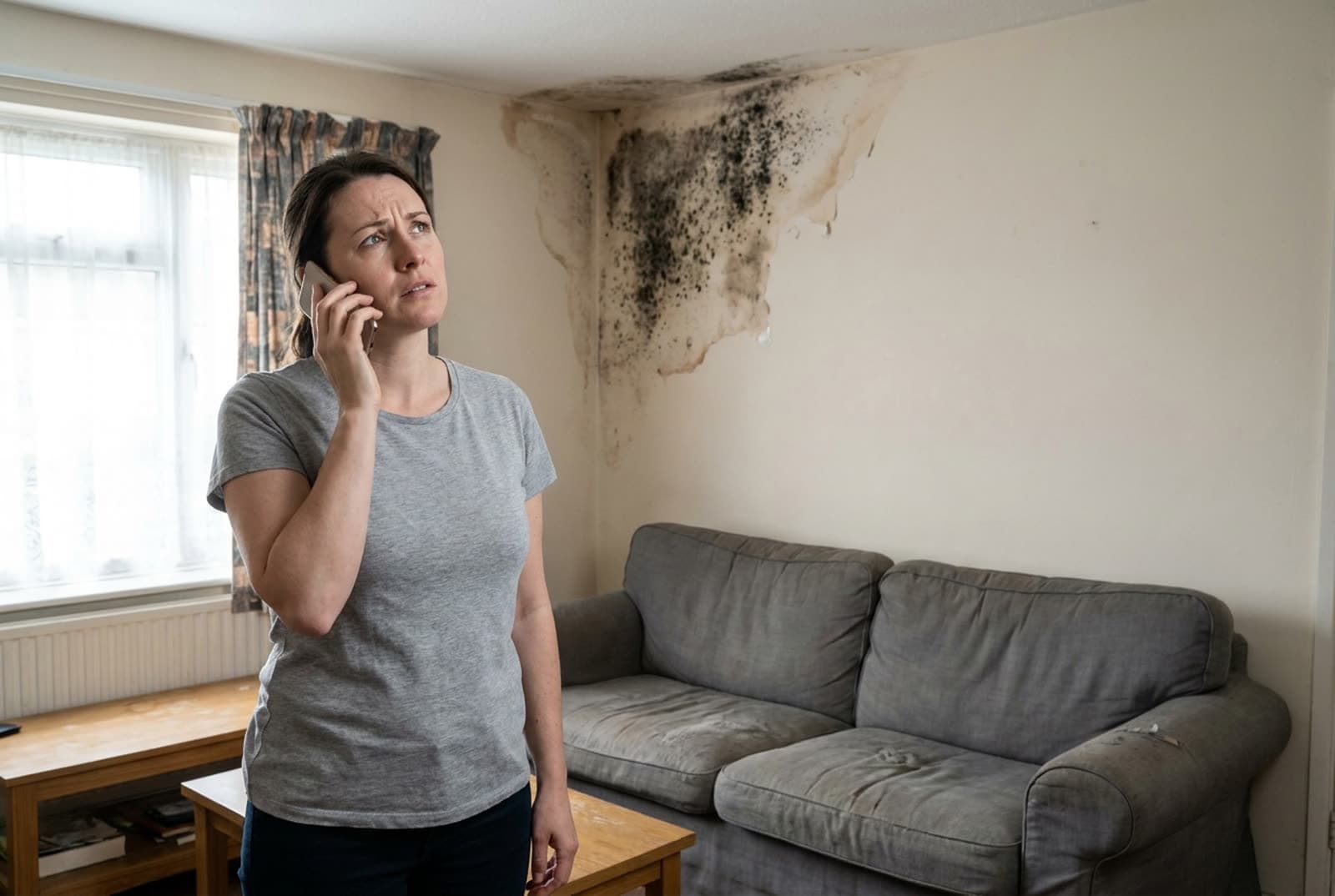
Yes. A damp proof course is part of the building's structure, so a failed or missing one causing rising damp is the landlord's to put right under their
On this page
In short
Yes. A damp proof course is part of the building's structure, so a failed or missing one causing rising damp is the landlord's to put right under their repair duty. Report the damp in writing, ask for the cause to be investigated, not just the symptoms painted over, and keep a dated record.
Rising damp does deep damage in rented homes, and a failed or absent damp proof course (DPC) is often behind it. Here is what a DPC is, when the landlord answers for it, and what to do if rising damp is in your home.
Key facts
- The 2024 to 2025 English Housing Survey found serious condensation (3% of homes) was more common than penetrating damp (2%) or rising damp (1%). English Housing Survey 2024-25, GOV.UK
- The same survey found about 5% of homes in England, around 1.4 million, had a problem with damp, most common in privately rented homes (10%). English Housing Survey 2024-25, GOV.UK
What is a damp proof course?
A damp proof course is a waterproof layer built into the base of a wall to stop ground moisture climbing through the brickwork. Most homes built after the late Victorian era have one. In older homes it may be missing, or worn out.
A failed, missing or bridged DPC lets moisture climb the walls, causing:
- Damp patches on lower parts of walls
- Peeling or bubbling plaster
- White crystal-like deposits on walls
- Mould growth at low levels
- Rotting skirting boards and timber
Is the landlord responsible for the damp proof course?
Yes. The DPC is part of the structure. Under Section 11 of the Landlord and Tenant Act 1985, landlords must keep the structure in repair, and a failed or missing DPC causing rising damp is a structural failure inside that duty.
"It is just an old property" is no answer. If the home is in disrepair because the DPC failed, the landlord must deal with it.
What causes a damp proof course to fail?
- Physical wear to the DPC material over time
- Bridging: soil, paving or render raised above the DPC, giving moisture a path around it
- Chemical or injected DPCs in older homes that wore out, or went in badly
- No DPC at all, in some older homes
What should a landlord do about rising damp?
Addressing rising damp properly requires:
- Finding the cause: an independent survey does this properly
- Fixing the cause: installing, repairing or renewing the DPC, or lowering the ground that bridges it
- Repairing the knock-on damage: replastering, replacing rotten timber, treating mould
Repainting a wall without touching the damp is a fix that will fail.
How do I report this?
Report it to your landlord in writing: email, text or letter, with photos of the affected areas. Ask specifically for a damp survey, and for the repairs.
If the landlord goes quiet or refuses, the council's housing enforcement team can inspect and require repairs under the Housing Act 2004.
When should I contact Support for Tenants?
Rising damp in your rented home, and a landlord who has not dealt with it? We may be able to help you bring a claim. Call us.
Call us on 0800 030 4669. No upfront cost. You only pay if you win, and the fee comes out of the compensation, not your pocket. If you don't win, you pay nothing.
Sources
- Landlord and Tenant Act 1985, Section 11 (legislation.gov.uk)
- Homes (Fitness for Human Habitation) Act 2018 (legislation.gov.uk)
- Housing Act 2004 (legislation.gov.uk)
We review every guide at least twice a year and update it when the law changes. If you spot something out of date or wrong, email help@supportfortenants.co.uk.
Reviewed against current housing law for England and Wales as at 15 June 2026. Checked by our SRA-regulated panel solicitors. This is general information, not legal advice for your specific case. Any compensation figures or ranges shown are illustrative only, not a promise; every case is different.
Related guides
Can I sue my landlord for mould?
Yes. If your landlord ignores damp and mould, you can claim. Here is the law and how it works.
Read
How to report damp to your landlord (and make it stick)
The exact steps to report damp in writing, what evidence to keep, and what your landlord must do under Awaab's Law. 5-minute read.
Read
Is condensation the landlord's fault or mine?
Often the landlord's. If condensation comes from poor ventilation, cold walls, or a building fault, it is their job to fix. Here is how to tell.
Read
Still stuck?
Call us free or start a claim online. We'll tell you honestly whether you have a case worth pursuing.