Do you have mould in your rented home? You may wonder if getting it tested is worth it. You may also wonder if a test will help with a complaint or a legal
On this page
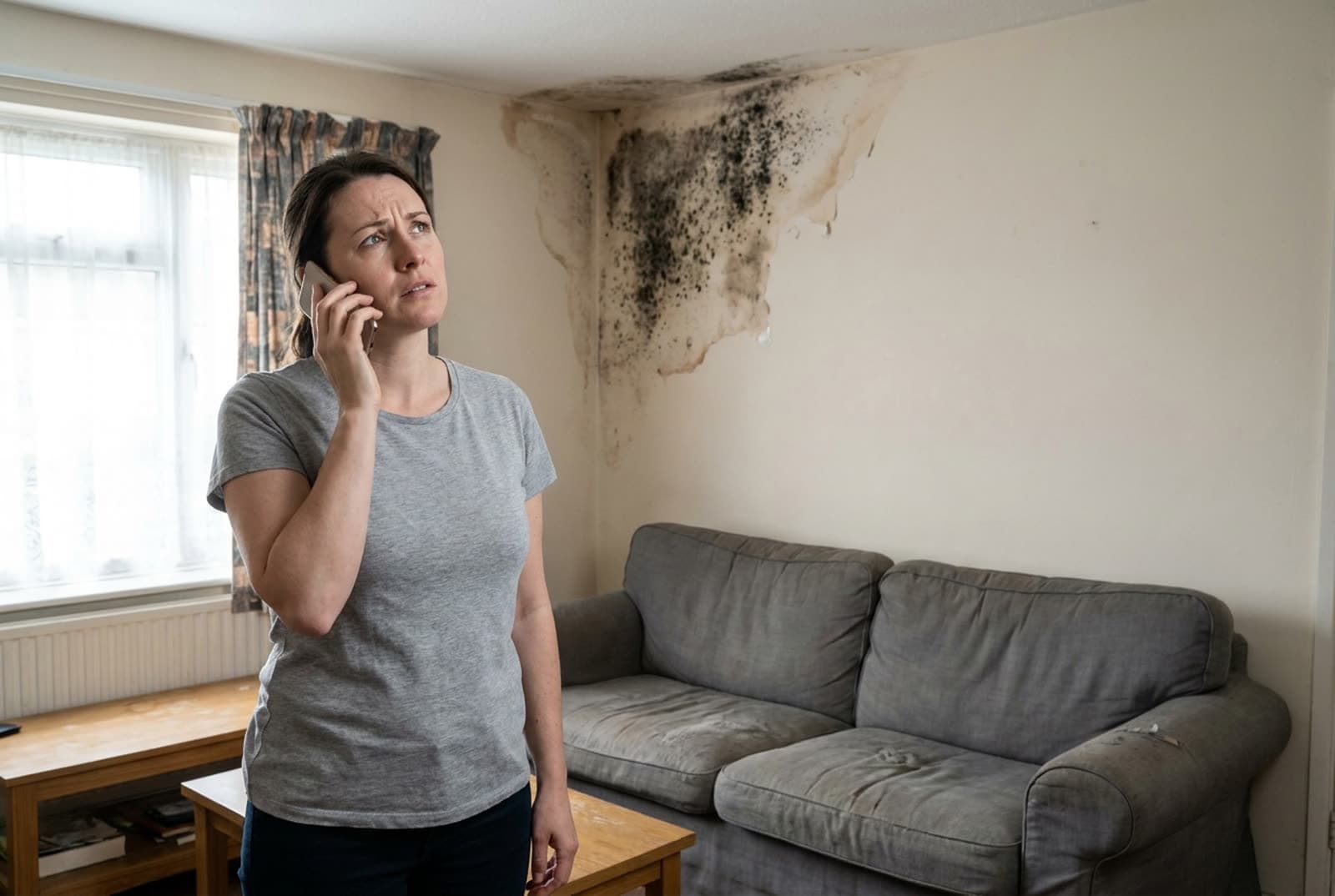
Do you have mould in your rented home? You may wonder if getting it tested is worth it. You may also wonder if a test will help with a complaint or a legal claim. Below, we explain what mould testing is. We look at when it might help, and when you do not need it.
Key facts
- The 2024 to 2025 English Housing Survey found about 5% of homes in England, around 1.4 million, had a problem with damp, most common in privately rented homes (10%). English Housing Survey 2024-25, GOV.UK
- Official guidance from the UK Health Security Agency and the Department of Health and Social Care links damp and mould in homes in England to around 5,000 cases of asthma and 8,500 lower respiratory infections among children and adults. Health risks of damp and mould, GOV.UK
What is mould testing?
Mould testing means taking samples from the mould in your home. The samples go to a lab. The lab works out what type of mould it is. Sometimes it also measures how many mould spores are in the air.
There are two main types:
Surface sampling: You take a swab or tape lift from a surface where you can see mould. This tells you the type of mould.
Air sampling: Air is pulled through a small holder or caught on a plate. This measures how many mould spores are in the air. It shows if the levels are higher than the air outside.
Is mould testing needed to make a disrepair claim?
In most cases, no. For a normal damp and mould claim, you do not need a lab test. Here is what matters in law:
- Proof that mould and damp were there (photos, your own account, inspection reports)
- Proof that the cause was a repair your landlord did not do (damp in the structure, a failed damp-proof course, a leaking roof)
- Proof that you told the landlord and they did not act
A surveyor's report is usually enough. It can show the cause and how bad the damp and mould are, without a lab test. A housing disrepair solicitor will arrange this report as part of the claim.
When might mould testing be useful?
There are a few times when a mould test may help:
Health impact evidence: You might claim for personal injury as part of a disrepair claim. For example, a family member may have got asthma or another breathing problem. Air sampling results that show high mould spore levels can help link the mould to the health effects. But a medical report linking the symptoms to the home is usually more important than the mould test.
Identifying the species: Most mould in homes (including black mould) is common and well understood. In rare cases, you may suspect an unusual or very harmful type. A test can then confirm what is there.
Disputes about cause: A landlord may say the mould is caused only by how you live (condensation), not by problems with the building. If there is a real dispute about this, a surveyor's view is usually more convincing than a mould test. But in tricky cases, a test may add extra proof.
Should I arrange mould testing myself?
You usually do not need to arrange a mould test before you contact a housing disrepair solicitor. Solicitors and surveyors who work on disrepair claims already have set ways to gather proof. Paying for your own mould tests may not make your case stronger.
Are you worried that mould is affecting your health? Speak to your doctor (or general practitioner) first. They can check your symptoms and refer you for more tests if needed.
What evidence should I collect instead?
The most useful proof for a damp and mould disrepair claim is:
- Photographs, taken often, with dates. Take photos of every area affected, including the worst areas.
- Written reports to your landlord, emails and texts that show when you reported the problem.
- The landlord's response (or lack of response)
- Medical records if your health has been affected
- Records of damaged belongings, photos and receipts if mould has damaged clothing, furniture, or bedding
Put this proof together with a report from an independent surveyor. That is the base of a disrepair claim.
When should I contact Support for Tenants?
If your rented home has damp and mould that your landlord has not dealt with, you may have a housing disrepair claim.
Call us on 0800 030 4669. No upfront cost. You only pay if you win, and the fee comes out of the compensation, not your pocket. If you don't win, you pay nothing.
Sources
- Section 11, Landlord and Tenant Act 1985 (legislation.gov.uk)
- Homes (Fitness for Human Habitation) Act 2018 (legislation.gov.uk)
We review every guide at least twice a year and update it when the law changes. If you spot something out of date or wrong, email help@supportfortenants.co.uk.
Reviewed against current housing law for England and Wales as at 15 June 2026. Checked by our SRA-regulated panel solicitors. This is general information, not legal advice for your specific case. Any compensation figures or ranges shown are illustrative only, not a promise; every case is different.
Related guides
Can I sue my landlord for mould?
Yes. If your landlord ignores damp and mould, you can claim. Here is the law and how it works.
Read
How to report damp to your landlord (and make it stick)
The exact steps to report damp in writing, what evidence to keep, and what your landlord must do under Awaab's Law. 5-minute read.
Read
Is condensation the landlord's fault or mine?
Often the landlord's. If condensation comes from poor ventilation, cold walls, or a building fault, it is their job to fix. Here is how to tell.
Read
Still stuck?
Call us free or start a claim online. We'll tell you honestly whether you have a case worth pursuing.