
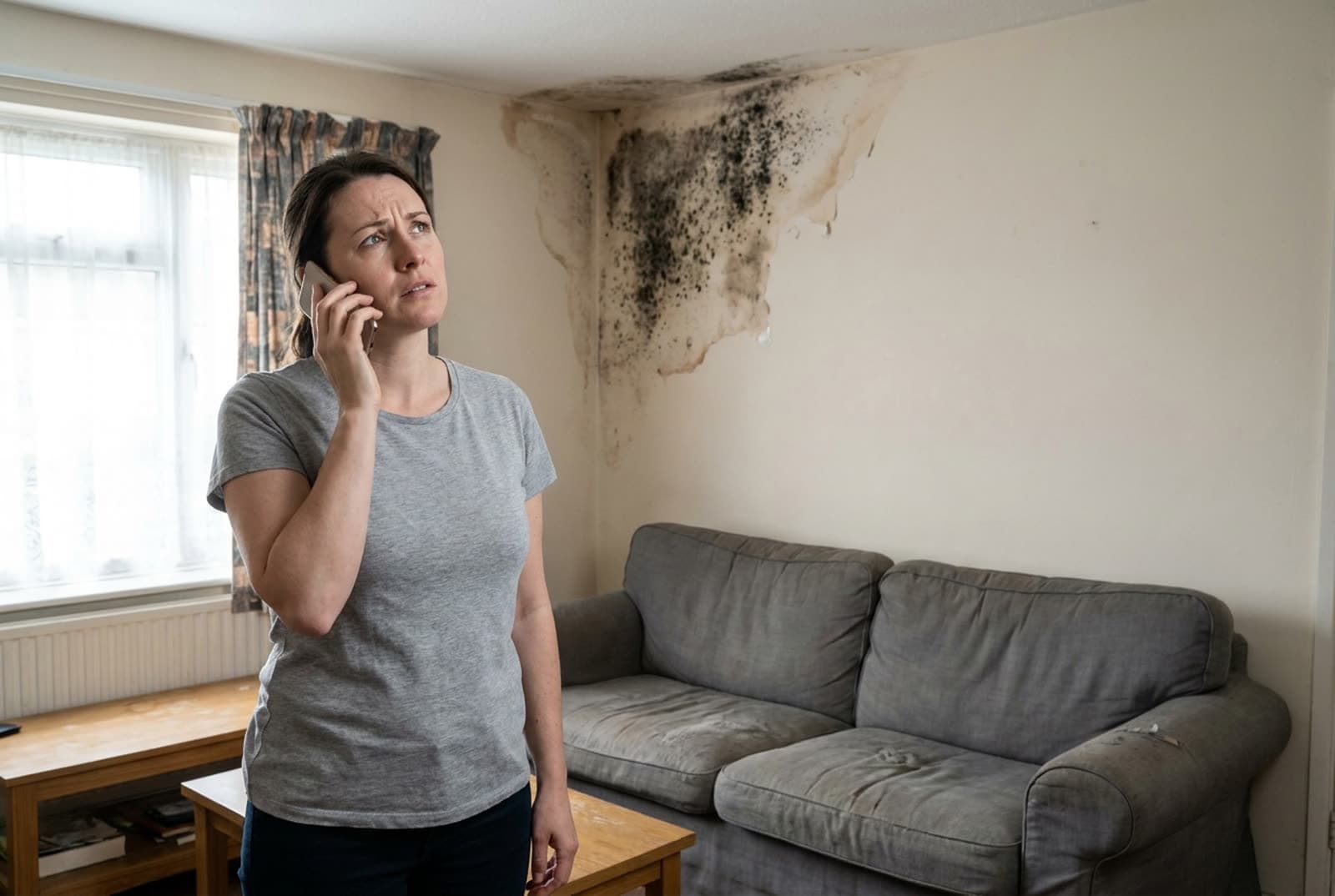
How damp and mould compensation is worked out in England and Wales: a share of the rent for the time the problem lasted, plus more where health or belongings were affected, and what real published figures show.
On this page
Short answer: There is no fixed amount. The bulk of an award is usually calculated as a percentage of the rent paid during the period the home was affected, typically 25% to 50% for a serious, ongoing problem and less for minor cases (the approach in Wallace v Manchester City Council), with more on top where your health was affected or belongings were damaged. The standard limitation period for bringing a claim is 6 years. Awaab's Law (in force 27 October 2025) sets fixed statutory response times social landlords must meet for damp and mould.
This is a framework, not a quote. Every case turns on its facts.
What goes into a damp and mould compensation award
Awards in housing disrepair generally combine three or four elements:
- Money back on your rent, a share of the rent you paid while the home was not fit to live in properly. Often put as "25% back for a year of mould in two rooms" or "50% back for six months where the whole flat was affected".
- A payment for the stress and discomfort, a separate amount for the upset, the inconvenience, and any effect on your health (usually backed up by letters from your doctor and medical records).
- The cost of what was ruined, money to replace belongings (clothes, bedding, furniture, electronics) damaged by the damp and mould, plus any money you had to spend because of it.
- An order to fix the home, the court can order the landlord to actually carry out the repairs.
The 25% to 50% rent framing
Courts have developed an unofficial scale for how much of the rent you "did not get the benefit of" when the home was affected by damp and mould. The rough bands look like:
| Severity | Rough rent reduction |
|---|---|
| Mould in one room, mild, intermittent | 10 to 20% |
| Mould in two or more rooms, persistent | 25 to 35% |
| Severe mould affecting most of the home, belongings damaged | 40 to 50% |
| Whole home uninhabitable | 50%+ (and often a separate award for alternative accommodation) |
You then take that percentage off the rent you paid while the home was affected. So 30% off £700 a month for 18 months = £3,780 from the rent part alone, before anything for the stress or for ruined belongings is added on top.
What real published figures show
The most recent independent statutory review of social-housing complaints (2024 to 2025) ordered or recommended £5.4 million in compensation for tenants in England, across 26,901 orders and recommendations. The average compensation per upheld case was £947, 578 cases had orders over £2,000, and the largest single order was almost £32,000.
These are sector-wide outcomes ordered by the independent review, not Support for Tenants results, and they include every kind of complaint, not just damp and mould. What your own case is worth depends on your rent, how long the problem lasted, how bad it was, and what you can prove. You can read real published rulings, with their sources, on our case studies page.
The largest single damp-related case in recent UK history, the inquest into the death of 2-year-old Awaab Ishak in Rochdale, led directly to the 2023 reforms that became Awaab's Law. The personal-injury element of any case where there has been a death sits in a different legal pathway altogether (clinical negligence/Fatal Accidents Act).
You usually have 6 years to claim
For housing disrepair, the law (the Limitation Act 1980) usually gives you six years to claim, counting from when the problem started. So you can normally claim for up to six years of damp and mould, as long as you were the tenant during that time and you reported it.
A couple of exceptions:
- For the health part of a claim, the limit is three years from when you knew your health was affected.
- In Wales, the rules can be slightly different, so get advice from someone who knows the Welsh system.
How Awaab's Law affects the figure
Since 27 October 2025, social landlords in England have been required to investigate prescribed hazards (including damp and mould) inside fixed statutory timescales and to carry out emergency repairs inside 24 hours. Where a landlord misses those deadlines, that breach is now a named statutory failure rather than just a general one, and evidence that the deadlines were missed strengthens what you can prove.
The government intends to extend Awaab's Law-style timescales to the private rented sector through the Renters' Rights Act 2025, on a timetable it is still confirming.
What you have to prove
To get compensation you need to show:
- The defect existed (photos, dates, contractor visits, environmental health reports).
- The landlord was on notice (reports in writing, complaints references, emails, portal screenshots).
- The landlord failed to put it right inside a reasonable time (the running clock between report and repair).
- You suffered loss (rent paid during the period, damaged belongings, health impact, out-of-pocket costs).
Without "notice in writing", most cases fail. Keep records.
How a claim actually works
- Free assessment, most CMCs and solicitors offer this. Call us on 0800 030 4669.
- Letter of claim to the landlord.
- Landlord investigates and usually offers a settlement.
- Court action only if the landlord refuses to settle reasonably.
The solicitor should explain the no-win, no-fee agreement before you sign. No upfront cost. You only pay if you win, and the fee comes out of the compensation, not your pocket. If you don't win, you pay nothing.
Get help
If you have lived with damp and mould that your landlord has not fixed, call Support for Tenants on 0800 030 4669 for a free assessment. We are a regulated company, not a law firm, we connect tenants with solicitors who run housing disrepair cases on a no-win-no-fee basis.
Sources: Section 11, Landlord and Tenant Act 1985 (legislation.gov.uk); Limitation Act 1980 (legislation.gov.uk); Annual Complaints Review 2024 to 2025 (housing-ombudsman.org.uk).
Support For Tenants is a trading name of Cyntex Group Ltd, authorised and regulated by the Financial Conduct Authority as a Claims Management Company. FRN 1020217. Registered in England and Wales.
Reviewed against current housing law for England and Wales as at 1 August 2026. Checked by our SRA-regulated panel solicitors. This is general information, not legal advice for your specific case. Any compensation figures or ranges shown are illustrative only, not a promise; every case is different.
Related on Support for Tenants
Renting with damp, mould or leaks your landlord won't fix?
No upfront cost. You only pay if you win, and the fee comes out of the compensation, not your pocket. If you don't win, you pay nothing.