
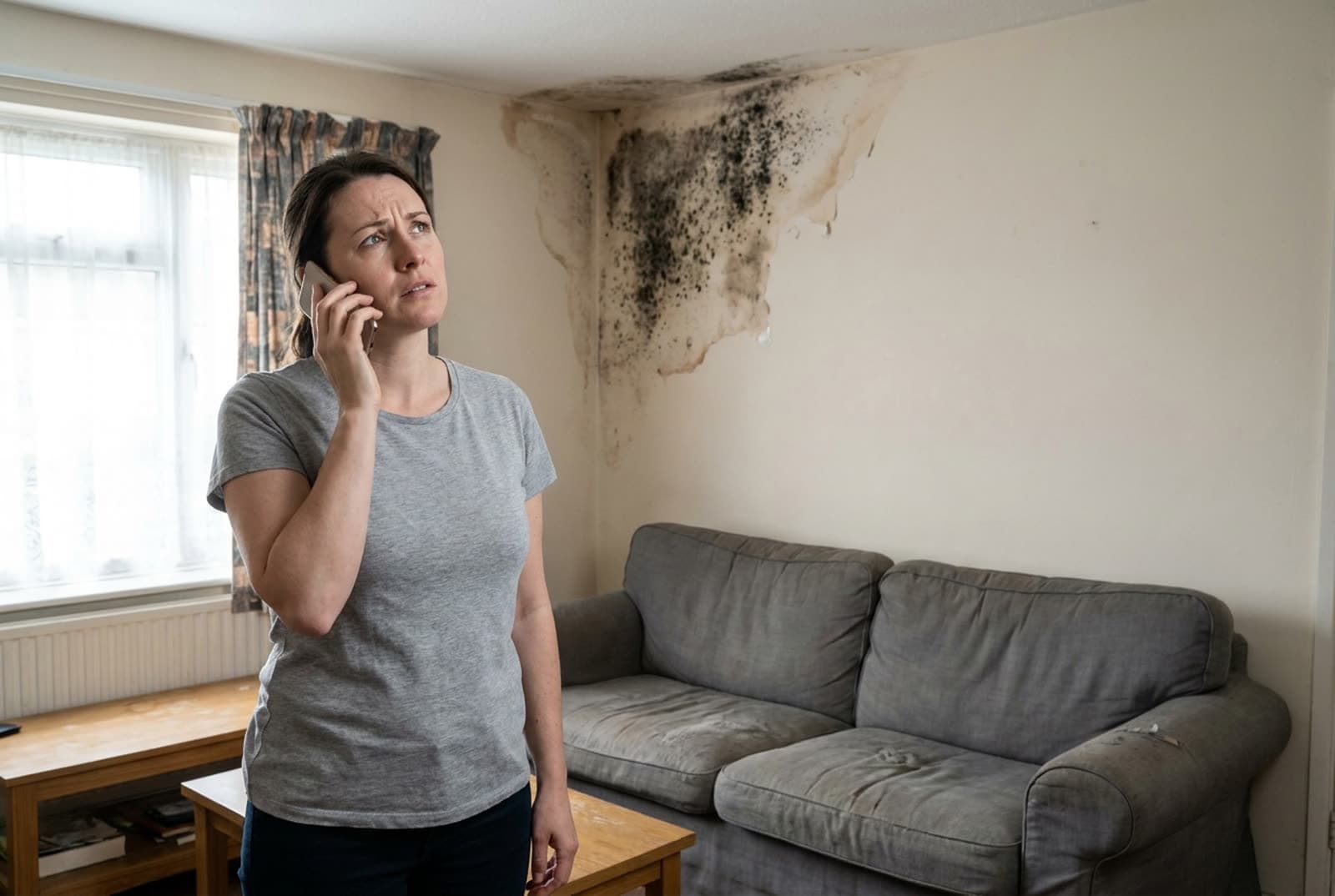
Been told it is just condensation, or that you caused the damp? The legal difference between structural damp and condensation, and how to prove it is not your fault.
On this page
If your landlord has told you "it's just condensation", "you need to ventilate more", or "you caused this yourself", you are not alone. It is one of the most common things tenants hear, and it is often used to avoid carrying out a repair. Sometimes it is fair. Very often it is not. Here is how to tell the difference and what to do about it.
The difference between structural damp and condensation
There are two broad kinds of damp, and the distinction matters because it usually decides who is responsible.
Structural damp gets into the building from outside or below. Penetrating damp comes through a leaking roof, cracked walls, failed pointing or blocked guttering. Rising damp comes up from the ground where a damp-proof course has failed. A plumbing leak behind a wall does the same. All of these come from disrepair, and disrepair is your landlord's responsibility.
Condensation forms when warm, moist air meets a cold surface and water settles, often on windows, in corners and behind furniture. Landlords frequently blame it on the tenant's lifestyle. But condensation is not automatically your fault. A home that has no working extractor fans, poor insulation, single glazing, cold walls or heating you cannot afford to run will produce condensation no matter how carefully you live. In that situation, the problem is the building, not you.
What section 11 of the Landlord and Tenant Act says
Section 11 of the Landlord and Tenant Act 1985 puts a duty on your landlord to keep the structure and exterior of your home in repair, and to keep the installations for heating and hot water in working order. If your damp is caused by something that has fallen into disrepair, a leak, a failed damp-proof course or broken guttering, then it falls squarely within that duty.
There is also the Housing Health and Safety Rating System. If a home is so cold or so poorly ventilated that damp and mould take hold and cannot reasonably be controlled, a council can assess that as a hazard the landlord must address. So even where condensation is involved, the responsibility can still rest with the landlord.
How to prove the damp isn't your fault
Evidence is what turns "your word against theirs" into a clear case.
Take dated photographs of every affected area, and note where the damp is. Damp on an external wall, behind a wall or spreading from a fixed point often points to penetrating damp or a leak. Look at what the home gives you to manage moisture: are there working extractor fans in the kitchen and bathroom, is the heating working, are the windows draught-free and double glazed? If the answer is no, write that down.
Keep every written report you send and every reply you get. If your landlord says "ventilate more", ask in writing whether the property has working extractor fans and adequate heating. An independent damp survey can identify the true cause and is hard to argue with.
What to do next
Do not accept the "it's your fault" label just because it has been said to you. Report the problem to your landlord in writing, set out the evidence, and ask for an inspection and repair. Keep copies of everything.
If they continue to refuse, you can get free, independent advice on whether you have grounds for a housing disrepair claim. Support For Tenants is an FCA-authorised claims management company, not a solicitor. We check your situation, and where you have a case, we connect you with a solicitor from our panel who works on a no-win, no-fee basis. No upfront cost. You only pay if you win, and the fee comes out of the compensation, not your pocket. If you don't win, you pay nothing.
Frequently asked questions
Is condensation always the tenant's fault?
No. Condensation can be caused or made worse by the building itself, for example missing extractor fans, poor insulation or heating you cannot afford to run. Where the building cannot reasonably control moisture, responsibility can rest with the landlord.
My landlord blames my lifestyle. What can I do?
Ask, in writing, whether the home has working extractor fans and adequate heating, and gather dated photos. An independent damp survey can establish the real cause.
What does section 11 of the Landlord and Tenant Act cover?
It requires your landlord to keep the structure and exterior of your home in repair and to keep heating and hot water installations in working order. Damp caused by disrepair falls within this duty.
Do I need a damp survey before I do anything?
Not to begin. Start by reporting in writing and taking photos. A survey can help later by identifying the cause, and is often arranged as part of a claim.
Can Support For Tenants tell me if I have a case?
Yes. We will look at your situation and tell you honestly, including if we do not think you have a claim. The advice is free and independent.
Been told the damp is your fault?
You do not have to take that at face value. Get a free, independent view on where you really stand. Call free on 0800 030 4669 or start your claim.
Sources
- Landlord and Tenant Act 1985, section 11
- Housing Health and Safety Rating System guidance (GOV.UK)
- Understanding and addressing the health risks of damp and mould in the home (GOV.UK)
Support For Tenants is a trading name of Cyntex Group Ltd, authorised and regulated by the Financial Conduct Authority as a Claims Management Company. FRN 1020217. Registered in England and Wales.
Reviewed against current housing law for England and Wales as at 2 June 2026. Checked by our SRA-regulated panel solicitors. This is general information, not legal advice for your specific case. Any compensation figures or ranges shown are illustrative only, not a promise; every case is different.
Related on Support for Tenants
Renting with damp, mould or leaks your landlord won't fix?
No upfront cost. You only pay if you win, and the fee comes out of the compensation, not your pocket. If you don't win, you pay nothing.