
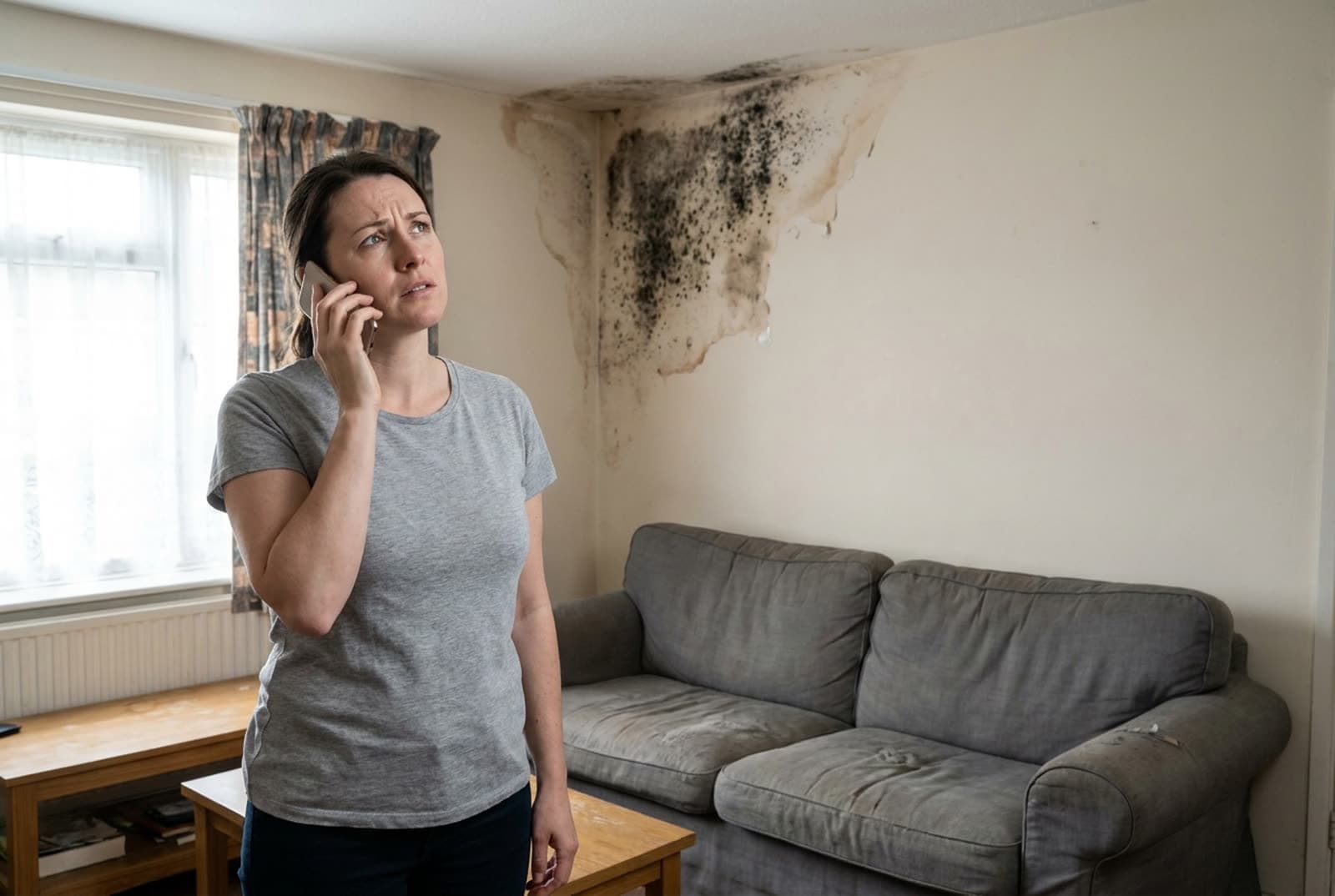
Worried your child's cough, wheeze or rash is linked to mould at home? The symptoms to watch for, what the law says your landlord must do, and how to get free, independent advice.
On this page
If your child has a cough that will not shift, wheezes at night, or has sore eyes and skin rashes, and there is black mould in your home, the two may well be connected. Children's lungs are still developing, which makes them more vulnerable to mould than adults. This page explains the warning signs, what the law says your landlord must do, and the steps to take if they ignore you.
Symptoms to watch for
Mould releases tiny spores into the air you breathe. The NHS warns that damp and mouldy homes can affect your health, causing or worsening breathing problems, allergies and infections, and that babies, children and people with asthma or existing lung conditions are most at risk.
In children, the common signs include a persistent cough or wheeze, more frequent asthma attacks, a blocked or runny nose, red or itchy eyes, and skin irritation. Some children get chest infections that keep returning.
One pattern is worth watching for. If your child's symptoms ease when they are away from the home and come back when they return, note that down and mention it to your doctor. A simple diary of when symptoms appear, and where the mould is, costs nothing and can become useful evidence later.
What the law says
This is a safety issue, and the law treats it as one.
Under section 11 of the Landlord and Tenant Act 1985, your landlord must keep the structure and exterior of your home in repair, which covers damp caused by disrepair. Damp and mould are also assessed under the Housing Health and Safety Rating System, and a serious case can be rated as a Category 1 hazard that a council has powers to make the landlord fix.
The death of two-year-old Awaab Ishak in Rochdale, caused by prolonged exposure to mould in his family's flat, led to Awaab's Law. Awaab's Law introduces legal timescales for social landlords to investigate and fix damp, mould and other hazards. If your landlord is a council or housing association, those duties apply to them directly.
What to do if your landlord won't act
Report the problem in writing, not just by phone. An email or a message through your landlord's portal creates a dated record. Describe the mould, say where it is, and make clear your child is unwell. Ask them to inspect and repair it, and keep a copy of everything.
Take clear, dated photographs of every affected room, and short videos if the mould is spreading. Save every reply, and make a note of the times they go quiet. If your child has seen a doctor about the symptoms, ask whether they can record a link to your housing conditions.
If the landlord still does nothing, you do not have to accept it. You can escalate, and you can get free, independent advice on your options.
How Support For Tenants can help
Support For Tenants is an FCA-authorised claims management company. We are not a solicitor. We listen to what is happening in your home, check whether you have grounds for a housing disrepair claim, and where you do, we connect you with a solicitor from our panel who works on a no-win, no-fee basis.
The initial claim check is free and independent. A real person will talk it through with you honestly, and that includes telling you if we do not think you have a claim. No upfront cost. You only pay if you win, and the fee comes out of the compensation, not your pocket. If you don't win, you pay nothing.
Frequently asked questions
Can mould really make my child ill?
The NHS recognises that damp and mouldy homes can cause or worsen breathing problems, allergies and infections, and that children are among those most at risk. If symptoms improve away from home, mention it to your doctor.
Is my landlord legally responsible for the mould?
If the damp is caused by disrepair to the structure of your home, your landlord is responsible under section 11 of the Landlord and Tenant Act 1985. Serious damp and mould can also be a Category 1 hazard under the Housing Health and Safety Rating System.
What is Awaab's Law?
Awaab's Law sets legal timescales for social landlords to investigate and fix damp, mould and other hazards. It is named after Awaab Ishak, who died after prolonged exposure to mould in his home.
What should I do first?
Report the problem to your landlord in writing, take dated photos, keep every reply, and see your doctor if your child is unwell. Then get free, independent advice on a possible claim.
Does it cost anything to start a claim?
If you appear to have a claim, we connect you with a panel solicitor who works on a no-win, no-fee basis. No upfront cost. You only pay if you win, and the fee comes out of the compensation, not your pocket. If you don't win, you pay nothing.
Worried about your child's health?
You do not have to face this alone, and you do not have to keep waiting on a landlord who will not act. Call free on 0800 030 4669 or start your claim.
Sources
- Landlord and Tenant Act 1985, section 11
- Understanding and addressing the health risks of damp and mould in the home (GOV.UK)
- Housing Health and Safety Rating System guidance (GOV.UK)
- Social Housing (Regulation) Act 2023, the basis for Awaab's Law
Support For Tenants is a trading name of Cyntex Group Ltd, authorised and regulated by the Financial Conduct Authority as a Claims Management Company. FRN 1020217. Registered in England and Wales.
Reviewed against current housing law for England and Wales as at 2 June 2026. Checked by our SRA-regulated panel solicitors. This is general information, not legal advice for your specific case. Any compensation figures or ranges shown are illustrative only, not a promise; every case is different.
Related on Support for Tenants
Renting with damp, mould or leaks your landlord won't fix?
No upfront cost. You only pay if you win, and the fee comes out of the compensation, not your pocket. If you don't win, you pay nothing.