
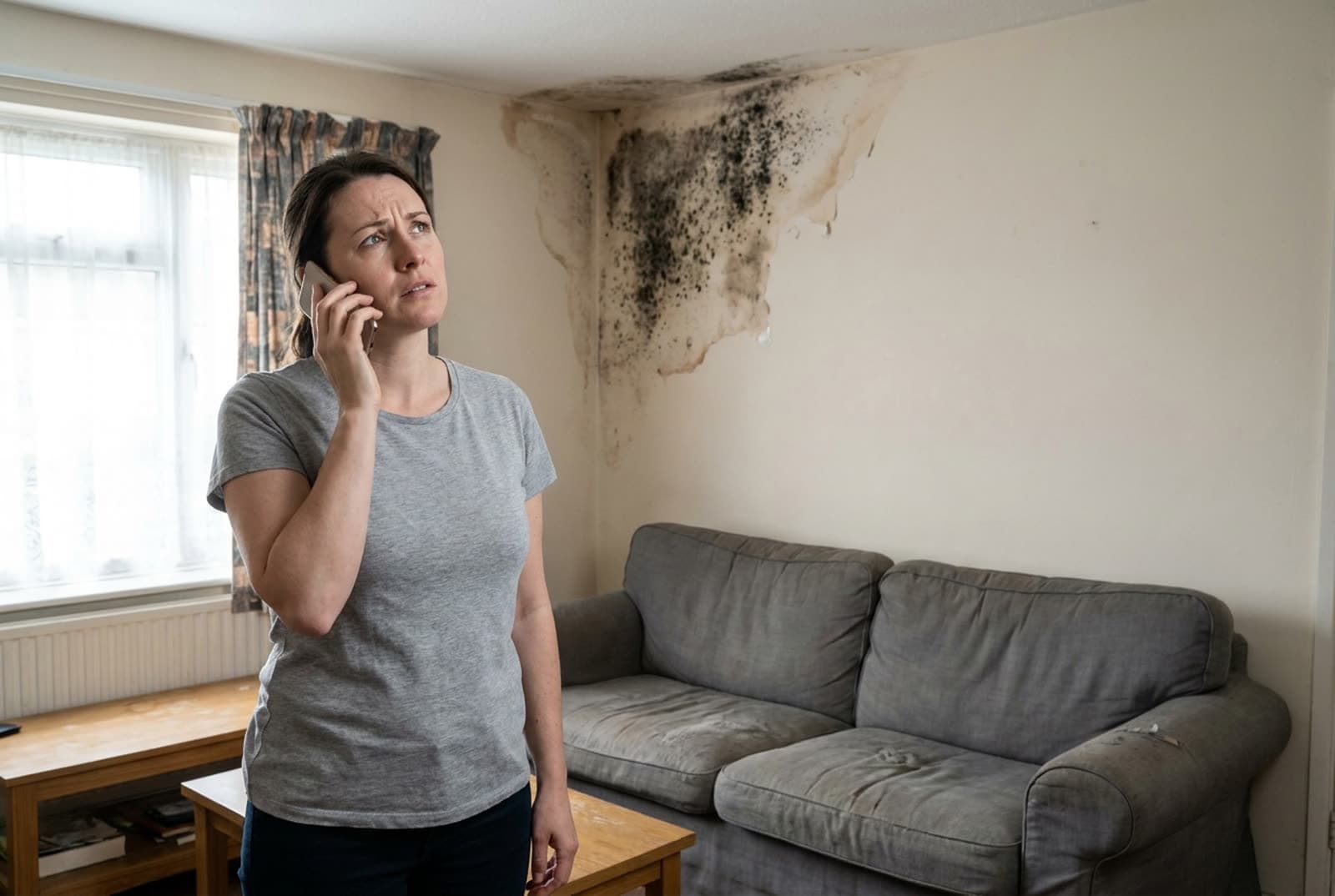
Yes. Failed cavity wall insulation can let damp soak into the outside walls of your rented home. If that happens, putting it right is your landlord's job.
On this page
In short
Yes. Failed cavity wall insulation can let damp soak into the outside walls of your rented home. If that happens, putting it right is your landlord's job. The structure of the home is their duty. Failed insulation may also be covered by the guarantee from the firm that fitted it. Report the damp in writing. Ask your landlord to find out what is causing it. Keep photographs.
Cavity wall insulation (CWI) can fail. This is more likely with older work from the 1990s and 2000s. It is also more likely if the insulation was wrong for that type of home. When CWI fails, it can let damp keep soaking through outside walls. This damp is hard to find the cause of, and hard to fix. Say your landlord fitted CWI that has failed. Or say they own a home where failed CWI is causing damp. Either way, they have a duty to sort it out.
Key facts
- The 2024 to 2025 English Housing Survey found about 2% of homes in England had excess cold as a category 1 (most serious) hazard, rising to 3% of privately rented homes. Damp and cold getting in through failed insulation can contribute to this. English Housing Survey 2024-25, GOV.UK
What is cavity wall insulation and why does it fail?
Many UK homes built between the 1930s and 1980s have cavity walls. That means two layers of brick or block with a gap (cavity) in between. Cavity wall insulation fills this gap with material. It is usually mineral wool, polystyrene beads, or foam. This is meant to keep the heat in.
CWI fails for a few reasons:
- Wrong type of home: homes that get hit by heavy driving rain are not suited to CWI. This often means homes near the coast or on hillsides. The rain can soak the insulation, which then passes the wet into the inner wall
- Insulation that has dropped or settled: over time, the insulation can get squashed. This makes cold spots and gaps that let damp through
- Insulation that was fitted badly: gaps in the work, the wrong material, or blocked weep holes (which let water drain out) can let damp cross the cavity
- Old farm buildings turned into homes: some homes were never built for CWI, and the work caused problems from the start
What are the signs of failed CWI?
- Damp patches on inside walls, mostly on walls that face the wind
- Damp spread over a large area of wall, not just one spot (a leak is usually in one spot)
- Damp that shows up after heavy rain
- Mould growing on walls that face outside
- Bigger heating bills as the insulation stops working well
- A test by a surveyor that confirms there is water in the cavity
Who is responsible for failed CWI?
Did your landlord fit the CWI? Or was it fitted while they owned the home? If so, the landlord must put right any problems it causes when it fails. This is because:
- The landlord has a duty to keep the structure and outside in repair (Section 11, Landlord and Tenant Act 1985)
- Damp coming through outside walls because of a fault in the structure is the landlord's job
- The Homes (Fitness for Human Habitation) Act 2018 says the home must be free from damp that is bad for your health
The CWI may have been fitted under a government scheme, such as the old Green Deal or ECO. If that work was faulty, the firm that fitted it may also be liable. But this does not take away the landlord's duty to keep the home free from damp.
What should you do?
Step 1, Report the damp in writing: tell your landlord about the damp. Point out that it shows on outside walls and may be linked to cavity wall insulation. Keep a copy of what you send.
Step 2, Ask them to look into it: ask the landlord to get a surveyor to check whether the CWI has failed. Some landlords push back, because taking the insulation out can cost several thousand pounds.
Step 3, Contact environmental health: if the landlord will not act, the council's environmental health team can inspect your home. They can give the landlord an Improvement Notice that orders them to deal with the damp.
Step 4, Keep records: keep photographs of the damp, write down temperature readings, and keep a diary of how it is affecting you and your household.
Can you bring a disrepair claim?
Yes. Say failed CWI is causing damp in your home, and you have told your landlord, but they have not acted. That counts as disrepair you can claim for. A disrepair claim can include money for the time you have lived with the damp. It can also include special damages for belongings that were ruined.
Failed CWI claims often need a surveyor's report to show what is causing the damp. The surveyor will check your home and say whether CWI is to blame. This is usually set up as part of the disrepair claim.
When should I contact Support for Tenants?
Does your home have damp that keeps coming back on outside walls, and your landlord will not look into it or fix it? This includes cases where failed cavity wall insulation may be the cause. Call us on 0800 030 4669.
No upfront cost. You only pay if you win, and the fee comes out of the compensation, not your pocket. If you don't win, you pay nothing.
Sources
- Landlord and Tenant Act 1985, Section 11 (legislation.gov.uk)
- Homes (Fitness for Human Habitation) Act 2018 (legislation.gov.uk)
Related articles
We review every guide at least twice a year and update it when the law changes. If you spot something out of date or wrong, email help@supportfortenants.co.uk.
Reviewed against current housing law for England and Wales as at 15 June 2026. Checked by our SRA-regulated panel solicitors. This is general information, not legal advice for your specific case. Any compensation figures or ranges shown are illustrative only, not a promise; every case is different.
Related guides
Burst pipe: who is responsible, the landlord or tenant?
A burst pipe is your landlord's job to repair. It is an emergency. Here is the law, who pays for the damage, and what to do right now.
Read
Is my landlord responsible for a broken toilet?
Yes. Your landlord must fix a broken toilet. If it is the only toilet in the home, it is an emergency. Here is the law and what to do.
Read
Is my landlord responsible for broken windows?
Yes, your landlord must repair broken windows. A window that will not close is a security and cold-weather risk. Here is the law and what to do.
Read
Still stuck?
Call us free or start a claim online. We'll tell you honestly whether you have a case worth pursuing.