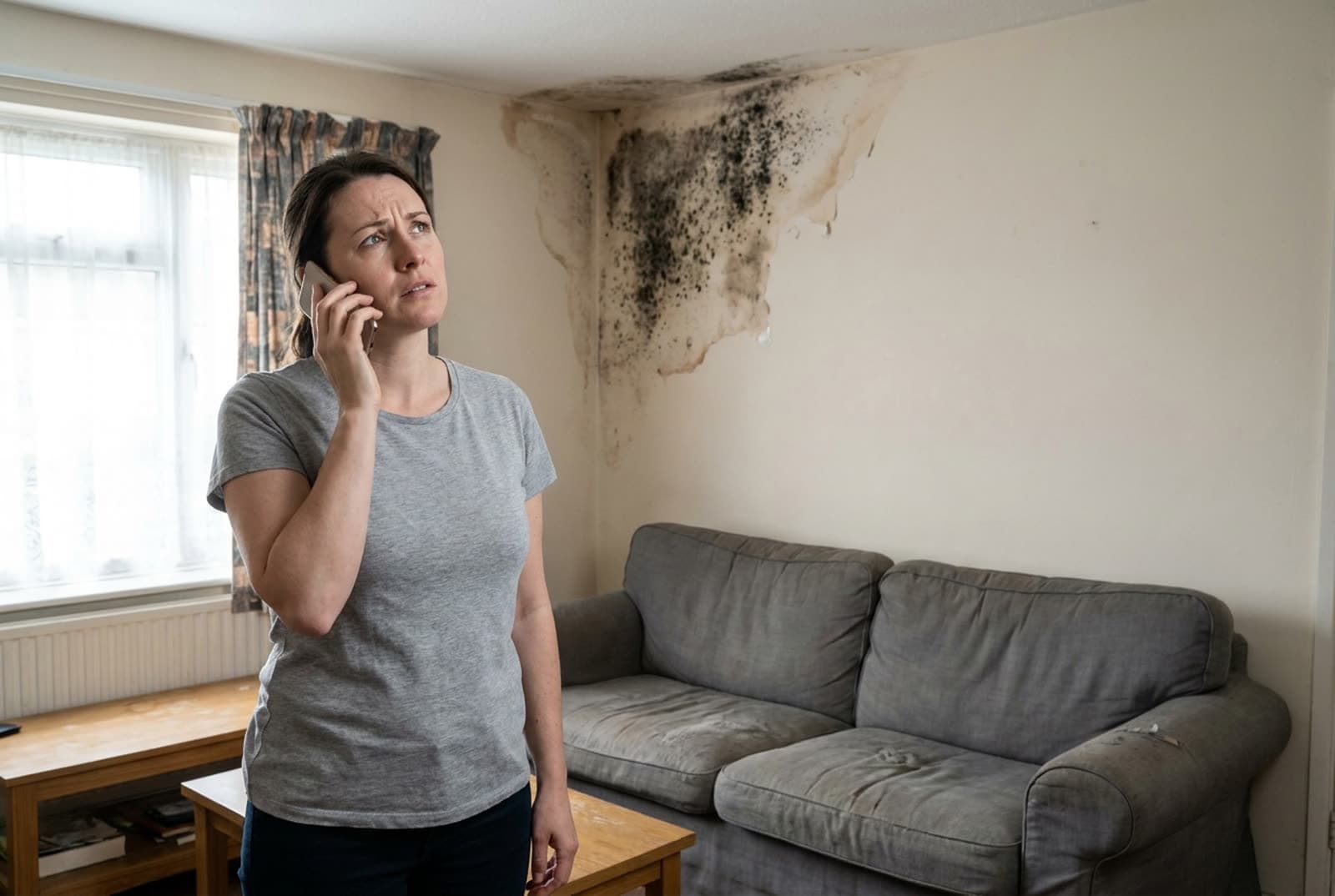
Landlords are expected to act on the early warning signs of damp, mould and other hazards, not wait for a formal complaint. Here are the signs, and how spotting them in your case strengthens a claim.
On this page
In short
Social landlords are now expected to act on the "early warning signs" of damp, mould and other hazards, not wait for a formal complaint. A 2026 review of the most serious housing failures said so plainly, ahead of Phase 2 of Awaab's Law later this year. For tenants the value is a checklist: where the signs were obvious and the landlord did nothing, your case grows stronger.
What the report covers
The review draws patterns from cases upheld at the most serious level. The early-2026 hazards edition covers:
- Spotting hazards
- Sorting them: emergency or significant
- Investigating properly
- Finishing the works
- Keeping tenants informed throughout
The thread running through it: landlords need to act on early warning signs, not just on formal complaints.
What counts as an early warning sign
Every social landlord is now expected to recognise these patterns. They matter because a landlord who ignored obvious signs, even before your formal report, stands on weaker ground, and you on stronger.
Repeated repair calls at the same property. Three or more contractor visits for the same room or installation, above all for damp or mould, is itself a warning sign. The landlord should escalate to a proper survey, not keep sending the same handyman.
A complaint trail across stages. A tenant using the complaints procedure again and again over a year on the same issue IS the warning. The landlord cannot fairly call it a surprise when a legal claim finally lands.
Health impact mentioned by the tenant. A child's cough, an older resident's chest trouble, worsening asthma: once mentioned in any report, the landlord is on notice, and a higher standard of response is expected.
Data the landlord already holds. Many social landlords survey their stock every five years or so. A home flagged for damp risk in that data cannot fairly have a later damp complaint treated as unexpected.
Patterns across the same block. Several flats reporting similar damp or mould means the landlord should hunt the building-level cause, not answer flat by flat. Failing to do so keeps appearing in the most serious findings.
Vulnerability disclosed at any point. Landlords should record vulnerabilities, age, disability, mental-health conditions, young children, on the file and use them to upgrade the category. A hazard that is "significant" for one household can be an "emergency" for a vulnerable one.
What this means for your case
Show that one or more of these signs was present and ignored, and your claim gains evidence.
Pull the call and email log. Asked about the same room again and again? Write and request the landlord's full record of those contacts. Data-protection law makes them release it on a subject access request.
Mention vulnerabilities in your first report. Say in writing if anyone in the household has a relevant condition, age or disability. The landlord must then weigh whether the hazard hits your household harder.
Use the building-level argument. Know of neighbours with similar damp or mould? Say so in your written report. The landlord is then on notice of the pattern.
How this interacts with Phase 2 of Awaab's Law
The report deliberately lands ahead of Phase 2, which extends Section 10A LTA 1985 to:
- Excess cold, including long-running heating failures
- Excess heat
- Fire safety
- Hygiene hazards: live pest infestations, waste
- Structural collapse
The same early-warning approach is expected for the new categories from day one of Phase 2. A landlord with three past heating call-outs at a property cannot fairly treat the fourth as a fresh surprise.
What to do this week
- Audit your paper trail. Every email, text, complaint reference and contractor receipt, in date order.
- Spot the warning signs in your case. Use the list above; note which were present, and when.
- Send one written reminder naming the signs and asking the landlord to confirm its response in writing.
- Save the response, or the silence, as evidence.
- If the response falls short, get the case checked. Call us; we will say honestly whether the evidence supports a claim.
Where Support for Tenants fits
We assess cases free on a 25-minute call. The early-warning evidence above is exactly what a panel solicitor weighs when deciding whether to take a case no-win-no-fee. Strong pack: the claim is simple to bring. Weaker: we will say what to gather first.
Read about Awaab's Law | Free call: 0800 030 4669
Sources: Learning from severe maladministration, hazards, Housing Ombudsman Service.
Support For Tenants is a trading name of Cyntex Group Ltd, authorised and regulated by the Financial Conduct Authority as a Claims Management Company. FRN 1020217. Registered in England and Wales.
Reviewed against current housing law for England and Wales as at 24 May 2026. Checked by our SRA-regulated panel solicitors. This is general information, not legal advice for your specific case. Any compensation figures or ranges shown are illustrative only, not a promise; every case is different.
Related on Support for Tenants
Renting with damp, mould or leaks your landlord won't fix?
No upfront cost. You only pay if you win, and the fee comes out of the compensation, not your pocket. If you don't win, you pay nothing.