
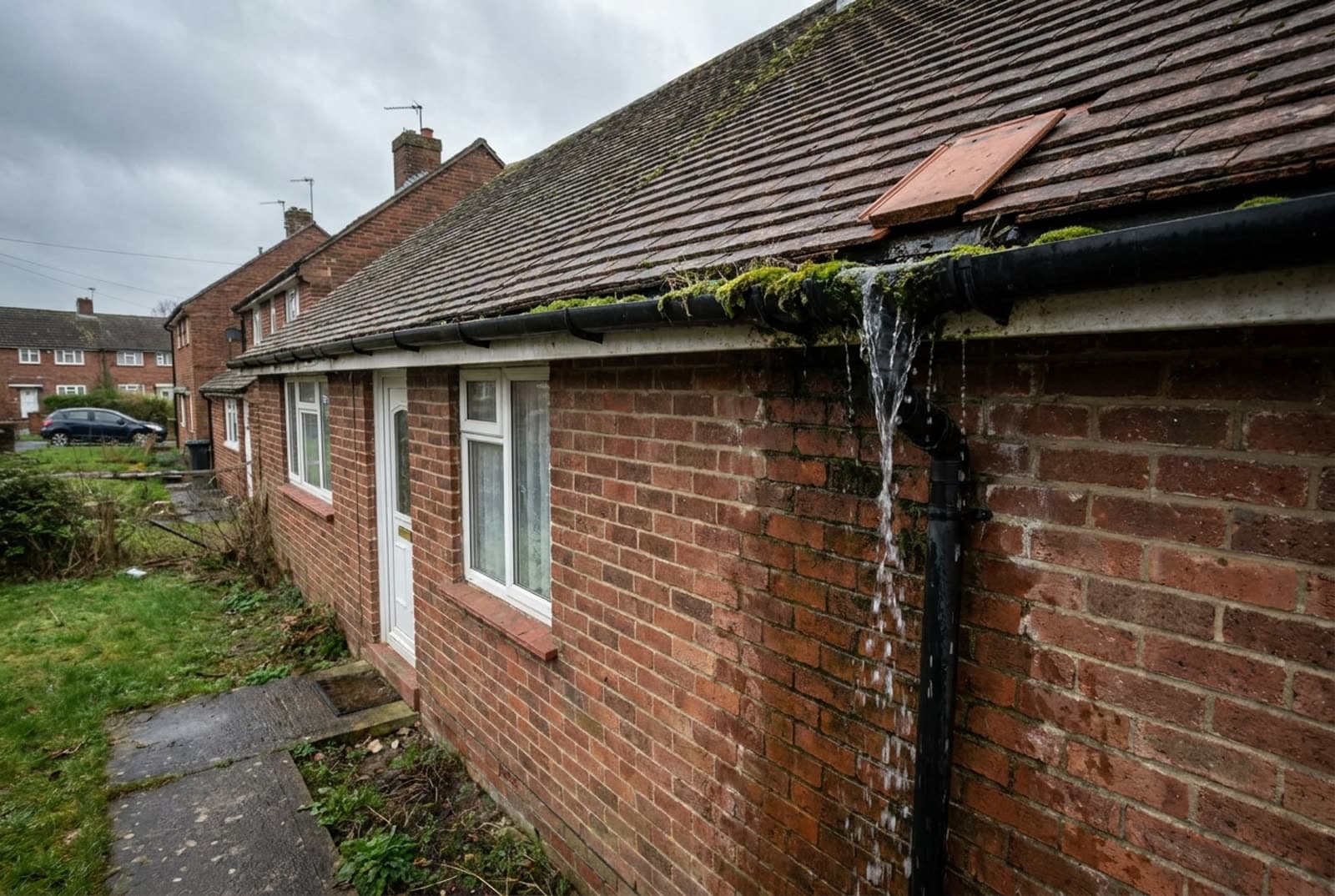
Your landlord is responsible for repairing storm damage to the roof, windows, and structure of your rented home. This is true even if the damage was caused
On this page
- The short answer
- Why is storm damage the landlord's problem?
- "My landlord says their insurer is dealing with it"
- How quickly does the repair need to happen?
- What you should do right away
- What if the landlord says you are responsible?
- A note for tenants in Wales
- When should I contact Support for Tenants?
- Sources
- Related articles
The short answer
Your landlord is responsible for repairing storm damage to the roof, windows, and structure of your rented home. This is true even if the damage was caused by the weather, not by anything the landlord did wrong. Their insurance does not change this.
Why is storm damage the landlord's problem?
Section 11 of the Landlord and Tenant Act 1985 places a legal duty on your landlord to keep the structure and exterior of your home in good repair. This includes:
- The roof
- External walls
- Windows and external doors
- Gutters and drainpipes
This duty applies regardless of how the damage happened. The law does not require the landlord to have caused the problem. A storm, a fallen tree, or wind-lifted tiles are all still the landlord's repair responsibility once the damage has occurred.
"My landlord says their insurer is dealing with it"
This is one of the most common reasons landlords give for delay, and it is not a valid one.
Your landlord may well have a buildings insurance policy, and they may be making a claim on it. That is a matter between the landlord and their insurer. It has no bearing on your rights as a tenant. Your claim is against your landlord, not the insurance company. The landlord remains legally responsible for carrying out the repair.
If the insurer is slow, or disputes the claim, that is the landlord's problem to manage. You should not be left living with a damaged roof or broken windows while the paperwork is sorted out.
How quickly does the repair need to happen?
The answer depends on how serious the problem is.
Emergency repairs: if water is actively coming through the roof, or if the structure is unsafe, the landlord must act urgently. They do not need to have a full solution in place immediately, but they must take steps to stop the damage getting worse. Temporary measures, such as covering the damaged section, count while a full repair is arranged.
Non-urgent structural repairs: if the damage is serious but not causing immediate danger, the landlord must carry out the repair within a reasonable time after you have reported it. What counts as reasonable depends on the nature of the damage. For roof or window damage, a few weeks is usually the outer limit before it becomes unreasonable delay.
What you should do right away
- Take photos and videos as soon as it is safe to do so. Make sure your device records the date and time on the files.
- Write to your landlord as soon as possible after the storm. Email is better than a phone call because it creates a record. Describe the damage clearly and ask for an urgent response.
- Keep copies of everything you send and receive.
- If you have belongings that have been damaged by water coming in, photograph those too and keep a list.
What if the landlord says you are responsible?
Unless the damage was caused by something you did, such as breaking a window yourself, the landlord cannot pass the repair cost to you. Normal wear and tear, storm damage, and structural failures are the landlord's responsibility.
A note for tenants in Wales
Wales runs its own law. The Renting Homes (Wales) Act 2016 gives most Welsh renters similar repair rights through their occupation contracts, including the structure and the roof. The landlord's duty comes out much the same.
When should I contact Support for Tenants?
Contact us if:
- Your landlord has not responded after you reported the storm damage
- Your landlord is using their insurer as a reason to delay the repair
- You are living with an active roof leak or broken windows and the landlord is not acting
- The damage has caused damp, mould, or damage to your belongings and you want to know if you can claim compensation
Call us free on 0800 030 4669. No upfront cost. You only pay if you win, and the fee comes out of the compensation, not your pocket. If you don't win, you pay nothing.
Sources
Related articles
We review every guide at least twice a year and update it when the law changes. If you spot something out of date or wrong, email help@supportfortenants.co.uk.
Reviewed against current housing law for England and Wales as at 15 June 2026. Checked by our SRA-regulated panel solicitors. This is general information, not legal advice for your specific case. Any compensation figures or ranges shown are illustrative only, not a promise; every case is different.
Related guides
Burst pipe: who is responsible, the landlord or tenant?
A burst pipe is your landlord's job to repair. It is an emergency. Here is the law, who pays for the damage, and what to do right now.
Read
Is my landlord responsible for a broken toilet?
Yes. Your landlord must fix a broken toilet. If it is the only toilet in the home, it is an emergency. Here is the law and what to do.
Read
Is my landlord responsible for broken windows?
Yes, your landlord must repair broken windows. A window that will not close is a security and cold-weather risk. Here is the law and what to do.
Read
Still stuck?
Call us free or start a claim online. We'll tell you honestly whether you have a case worth pursuing.